Choosing the best steel stamping machine in 2026 requires more than comparing tonnage, speed, and purchase price. Global buyers must examine accuracy, energy use, automation, maintenance access, and supplier support. A press may look impressive in a showroom. Production reveals the truth.
Industry data shows why this decision matters. Grand View Research valued the global metal stamping market at approximately USD 242.8 billion in 2023, with continued growth expected through 2030. The World Steel Association reported global crude steel production above 1.8 billion tonnes in 2024. Meanwhile, OICA recorded more than 85 million motor vehicles produced worldwide in 2024. These figures indicate sustained demand for formed steel components, although market growth will not benefit every machine supplier equally.
Domenico Iacovelli, CEO of Schuler Group, has stated, “Digitalization makes presses more transparent, more productive, and more flexible.” That principle should guide this 2026 comparison. A modern steel stamping machine needs reliable servo control, real-time monitoring, safe tooling changes, and measurable energy performance. It also needs practical support in the buyer’s region. This point is often underestimated. A low initial price can become expensive when spare parts travel slowly or technicians lack training.
The following guide compares machine types, working capacities, automation levels, and supplier credibility. It also questions common buying assumptions. The fastest press is not always the best press. The largest press may waste energy. Careful evaluation remains essential.
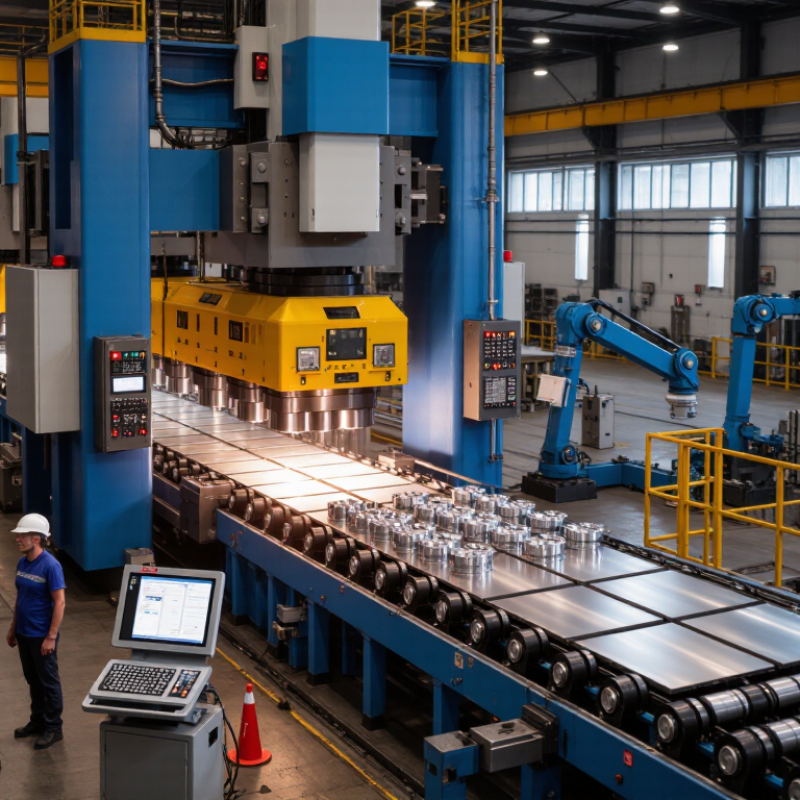
A steel stamping machine is industrial equipment that shapes flat steel sheets through controlled pressure. It uses a press, die set, and feeding system. The die contains the required cavity or cutting profile. When the press descends, the sheet is formed, pierced, blanked, or bent. The machine does not simply “push metal.” It controls force, speed, alignment, and repeatability.
Mechanical presses suit fast production and consistent stroke movement. Hydraulic presses provide adjustable pressure and longer forming time. Servo presses offer flexible motion control for complex parts. In a working factory, operators also check coil width, material thickness, lubrication, and die clearance. A small clearance error can create burrs, cracks, or uneven edges. The sound may change before the defect becomes visible.
Capacity matters, but it is not the only buying factor. A 160-ton press may handle one component well and fail on another. Buyers should compare rated force, bed size, stroke length, shut height, feeding accuracy, and safety controls. Maintenance access also deserves attention. It affects downtime more than many brochures suggest. Some specifications look impressive, yet practical testing may reveal vibration or slow setup. Steel grades, part geometry, production volume, and local electrical requirements should guide the final selection.

A steel stamping machine uses a die and press force to cut, bend, draw, or form steel sheet. The ranges below represent typical industry capacities: mechanical presses generally support high-speed production, hydraulic presses provide high forming force and control, while servo presses offer programmable motion and flexible energy management. Actual specifications vary by machine size, material thickness, die design, and production requirements.
2026 Best Steel Stamping Machine for Global Buyers?
How Steel Stamping Machines Work
A steel stamping machine shapes flat metal sheets with controlled pressure. The sheet enters through a feeder, often from a coil. Rollers straighten the material before each stroke. Inside the press, a die guides the forming process. The upper tool moves downward and applies force to the steel. The lower tool supports the sheet and controls its final shape. Depending on the die design, the process may cut, bend, draw, or pierce the material.
The machine’s rated tonnage must match the steel thickness and forming depth. Excessive force can damage the die or create cracks. Insufficient force produces incomplete shapes and rough edges. A flywheel or servo drive controls the slide movement. Sensors monitor position, pressure, and feeding accuracy. Ejector pins then remove the finished part. Small details matter.
In practical production, operators inspect samples with calipers, gauges, and visual checks. They watch for springback, burrs, wrinkles, and uneven holes. Lubrication reduces friction during deep drawing, but too much lubricant can affect later coating. That assumption can fail. Material grade, grain direction, and die clearance also change the result. Buyers should request trial runs using their actual steel specification. A reliable evaluation includes cycle speed, noise, maintenance access, safety guarding, and repeatability. Machine performance on paper is not always performance on the factory floor.
Steel stamping machines now serve automotive, appliance, construction, and precision hardware production. Choosing the right type depends on material thickness, part shape, output volume, and available floor space. Mechanical stamping presses deliver fast cycles and consistent force. They suit large batches of washers, brackets, and shallow panels. Hydraulic presses provide adjustable pressure and longer strokes. They work well with deep drawing and thicker steel parts. Servo presses offer precise slide movement and flexible speed control. Their energy savings can be valuable during frequent production changes.
Progressive stamping machines combine several operations in one continuous strip process. They reduce handling and improve output, but their dies require careful design and maintenance.
Transfer stamping machines move separate blanks between stations. They fit larger or deeper components, although setup can be more complex.
A machine may look excellent on paper and still disappoint beside a poorly designed die. That lesson deserves attention. Perfect choices rarely exist.
Tips: Check rated force, stroke length, shut height, feeder accuracy, and safety systems. Ask for test runs using your actual steel grade and thickness. Confirm electrical standards, spare-part access, operator training, and service response before purchasing. Do not judge only by maximum tonnage. A smaller, accurately controlled press may produce better parts and lower waste. Also review noise, energy use, guarding, and inspection records during factory evaluation.
Choosing a steel stamping machine starts with the part, not the advertised tonnage. Measure steel grade, thickness, blank size, and forming depth. A 160-ton press may suit shallow brackets but fail on deeper drawn components. Calculate peak force, then add a sensible safety margin. Do not guess. Review stroke length, shut height, slide accuracy, and die space with a tooling engineer. These details affect output, die life, and operator safety.
For global production, electrical compatibility and service access matter as much as pressing force. Confirm voltage, frequency, controls, guarding, noise limits, and documentation for each destination. Ask whether technicians can diagnose faults remotely and deliver critical parts within a realistic timeframe. A clear maintenance schedule should list lubrication points, inspection intervals, and replacement procedures. Choose automation carefully. Coil feeding, transfer systems, and sensors can improve consistency, but they also add setup complexity. Test the full line with representative coils and your actual die before acceptance. This is where specifications often look less impressive.
Compare energy use, changeover time, foundation needs, training, and five-year maintenance costs. The cheapest quote can become expensive after repeated stoppages. Request measured samples, not only brochures. Check dimensional repeatability, surface marks, scrap rate, and emergency-stop response during trials. Keep records of every result. No selection is perfect; teams may overvalue speed and overlook difficult die changes. Record those compromises openly, especially those the first trial fails to reveal.
2026 Best Steel Stamping Machine for Global Buyers?
For global buyers, machine price is only one part of the cost. A lower quotation may exclude tooling, freight, installation, training, and spare parts. Compare total ownership costs over five years. Check press capacity, stroke length, working speed, energy use, and material thickness. A machine suited for thin sheet may struggle with heavier steel. That mismatch can create costly downtime.
Compliance requires careful verification. Ask for electrical, safety, and documentation standards accepted in the destination market. Requirements differ by country and industry. Confirm guarding, emergency stops, control systems, noise limits, and technical files before payment. Independent inspection can reveal problems that sales documents overlook. Do not rely on one certificate alone.
After-sales support often decides whether production stays stable. Request written response times, remote troubleshooting, technician availability, and spare-parts lead times. Clear manuals and operator training matter on the factory floor. Local service partners can reduce delays, but their actual skills need checking. I would also test communication before ordering. A fast sales reply means little if support becomes slow later. Even a detailed evaluation can miss hidden maintenance costs, so keep a realistic repair budget.
A practical comparison of machine categories using indicative new-equipment ranges. Prices exclude tooling, freight, taxes, installation, and factory modifications.
| Machine Type | Typical Capacity and Use | Indicative 2026 Price Range | Productivity and Accuracy | Energy and Operating Factors | Key Compliance Requirements | Recommended After-Sales Package | Best Fit for Global Buyers |
|---|---|---|---|---|---|---|---|
| Mechanical Straight-Side Press | 25–160 tons; brackets, electrical parts, appliance components, and general sheet-metal work. | Approximately US$20,000–US$100,000, depending on tonnage, stroke, bed size, controls, and automation. | Generally suitable for high-volume blanking and forming. Production speed commonly ranges from about 40–250 strokes per minute, depending on the process and tooling. | High output with relatively low energy per stroke. Requires correct flywheel, clutch, lubrication, and die protection maintenance. | Risk assessment based on ISO 12100; safety-related control systems may follow ISO 13849-1; electrical equipment commonly references IEC/EN 60204-1. Destination-market requirements still apply. | Remote commissioning, electrical drawings, spare-parts list, operator training, troubleshooting response, and a documented warranty with clear exclusions. | Buyers prioritizing proven production economics and repeatable parts at medium-to-high volumes. |
| Progressive-Die Stamping Press | 80–300 tons; continuous coil-fed production for terminals, clips, brackets, and automotive or industrial components. | Approximately US$60,000–US$250,000 for the press and standard feed system, excluding progressive tooling. | Can achieve high parts-per-minute output when strip layout, die design, feed accuracy, and material quality are properly matched. | Efficient for long production runs, but tooling maintenance and coil handling can represent a significant part of total operating cost. | Guarding, interlocks, emergency stops, two-hand controls or presence sensing, electrical conformity, and documented risk-reduction measures are essential. | Die-tryout support, feed-line setup, spare sensors, replacement wear parts, preventive-maintenance schedule, and response-time commitments. | Global buyers with stable part designs, large annual volumes, and a clear return-on-investment target for tooling. |
| Servo Press | 80–300 tons; precision forming, variable slide motion, shallow drawing, and parts requiring flexible process control. | Approximately US$120,000–US$500,000+, depending on capacity, automation, software, and integrated line equipment. | Programmable slide profiles can improve forming control, reduce impact, and support different part recipes without changing the main mechanical setup. | Potentially lower energy use during certain operating profiles, but purchase price, drive systems, software, and specialist maintenance are higher. | In addition to machinery safety, verify drive-system documentation, software access, electromagnetic compatibility, and electrical requirements for the destination country. | Application engineering, recipe backup, software and parameter documentation, remote diagnostics, drive replacement capability, and trained local service technicians. | Buyers seeking process flexibility, better control of forming quality, and lower scrap on complex or frequently changing products. |
| Hydraulic Press | 100–1,000+ tons; deep drawing, embossing, large panels, thick materials, and operations requiring full force through the stroke. | Approximately US$50,000–US$350,000+, depending on force, daylight, table size, controls, and automation. | Usually slower than high-speed mechanical presses, but offers adjustable force, pressure, dwell, and slide position for demanding forming operations. | Hydraulic oil, filtration, seals, pumps, temperature control, and leakage prevention must be included in the lifecycle-cost calculation. | Safety guarding, pressure-system protection, emergency functions, electrical conformity, hydraulic documentation, and site-specific environmental controls should be verified. | Hydraulic schematics, oil and filter specifications, seal kits, commissioning support, annual inspection guidance, and a local or regional service option. | Buyers forming large, deep, thick, or difficult parts where controllable force is more important than maximum stroke rate. |
| Compact C-Frame Press | 10–100 tons; maintenance parts, small brackets, low-volume production, prototyping, and educational or workshop applications. | Approximately US$8,000–US$60,000, depending on automation, controls, safety equipment, and working-area dimensions. | Good accessibility and low entry cost. Frame deflection, throat depth, and off-center loading must be checked against the application. | Usually easier to install, but lower capacity and limited bed size may restrict future production expansion. | Verify guarding, emergency-stop performance, two-hand or presence-sensing protection, electrical voltage, and local workplace safety requirements. | Installation checklist, video training, readily available wear parts, clear wiring diagrams, and a practical remote-support channel. | Small manufacturers and distributors that need a flexible machine without the capital cost of a large automated line. |