Choosing the right fabrication machine can be daunting. With numerous options on the market, making an informed decision is essential. Each machine has unique features that cater to specific needs. A well-chosen fabrication machine can enhance productivity and quality in any manufacturing process.
Consider your operational requirements first. Do you need precision, speed, or versatility? The size of your workspace also matters. Some machines require more room, while others are compact. Additionally, a machine’s reliability and maintenance costs should not be overlooked. Poor choices may lead to disruptions and increased expenses over time.
Many factors play a role in this decision. Research and expert advice can guide you. Online reviews and user experiences offer valuable insights. Visiting a trade show may help you see machines in action. In the end, understanding your needs is vital for selecting the best fabrication machine. This decision will impact your operations for years to come.
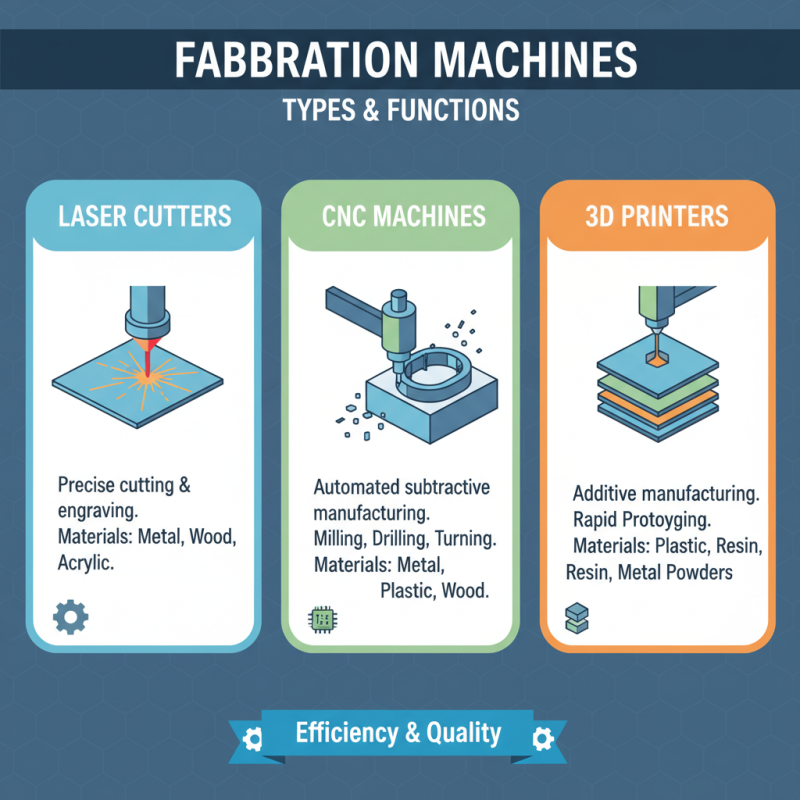
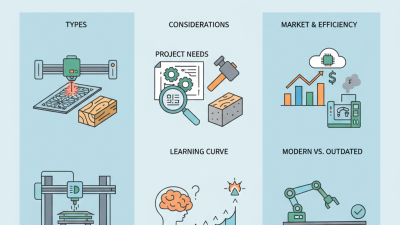
When selecting fabrication machines, understanding their types and functions is crucial. Fabrication machines vary widely in purpose. Common types include laser cutters, CNC machines, and 3D printers. Each serves distinct roles, affecting production efficiency and quality.
Laser cutters are designed for precision. They excel in material cutting and engraving. According to industry reports, they can achieve accuracy levels within 0.1mm. This technology is ideal for intricate designs. Yet, they may struggle with thicker materials, requiring skilled operators to manage settings properly.
CNC machines, or Computer Numerical Control machines, offer versatility. They automate milling and lathing processes. A recent study indicates that CNC machines can enhance productivity by up to 30%. However, they necessitate significant initial investment. Operators must also undergo thorough training to maximize machine efficiency.
3D printers are revolutionizing the industry with innovative production methods. They allow for complex geometries that traditional methods cannot achieve. However, they may produce less durable components. Understanding these limitations is vital when evaluating production needs. Balancing precision, cost, and material capability can lead to more informed decisions.
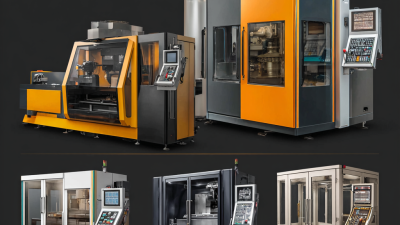
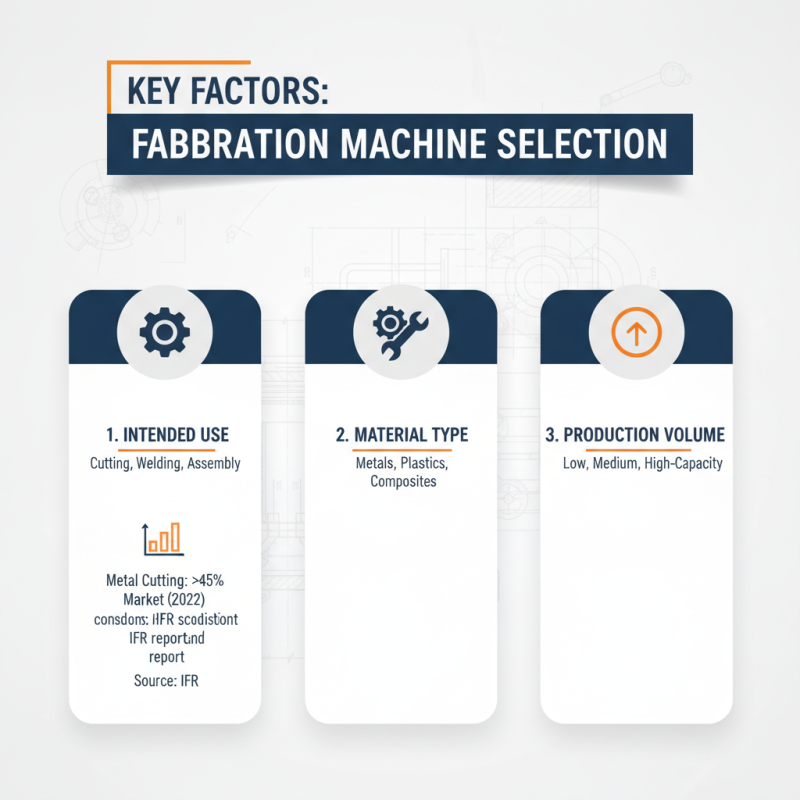
When selecting a fabrication machine, several key factors come into play. First, the machine's intended use is critical. Different machines serve different purposes, such as cutting, welding, or assembling. Evaluating the specific operations you plan to perform will help narrow down your options. For instance, a report from the International Federation of Robotics indicates that metal cutting machines accounted for over 45% of the market share in 2022. This data underscores the need to match the machine with your intended application.
Another important consideration is the machine's capacity and power. Understanding the materials you work with can influence this choice. Machines with higher power ratings typically handle thicker materials and more rigorous tasks. Data from Statista shows that production capacity is often linked to machine types, with laser cutting machines showing a significant efficiency advantage in terms of speed. Assessing these metrics helps identify a suitable machine without overspending on features you might not require.
Durability and serviceability shouldn't be overlooked. A reliable machine minimizes downtime, which is vital for productivity. Industry surveys have shown that maintenance issues can lead to losses of up to 30% in operational productivity. Investing in robust machinery with accessible support systems can mitigate these risks. Reflection on these points ensures that you're making a well-informed decision in a competitive market.
Choosing the right fabrication machine can be complex. Material compatibility is critical for success. Various materials, such as metals, plastics, and composites, require different approaches. The right machine ensures efficiency and quality in production.
Studies show that improper material selection can lead to a 30% increase in production costs. For instance, using a machine not suited for a particular material can lead to significant waste. In a report by the Fabricators & Manufacturers Association, nearly 25% of surveyed companies experienced losses due to material mismatches. This highlights the importance of thorough evaluation before selecting a machine.
Consider the characteristics of the materials. Different thicknesses and densities affect machining speeds and tool wear. A lightweight polymer may require different settings than a dense metal. A slight oversights in compatibility can lead to suboptimal results, increasing the risk of revisions and failure. Investing time in understanding material properties is crucial for optimal outcomes in fabrication processes.
When selecting a fabrication machine, assessing precision and tolerance standards is critical. Precision refers to how closely machines can replicate specifications. Tolerance relates to the acceptable limit of variation in a physical property. According to a report by the International Organization for Standardization (ISO), machines that operate within a tolerance of ±0.01 mm are considered highly precise. This level of accuracy is essential for intricate projects.
One key tip is to evaluate the machine's specifications against your project's requirements. If your project demands tight tolerances, look for machines specifically designed for such tasks. The American Society of Mechanical Engineers (ASME) highlights that even a small deviation can lead to significant issues in high-stakes applications, such as aerospace or medical sectors.
Not all machines meet the same standards. It's crucial to research and compare different options. Consider checking industry reviews and case studies to see how machines perform in real-world settings. Sometimes, even machines marketed for precision may not deliver consistently. Therefore, always verify claims through independent sources or seek expert opinions. This reflection on the limitations of various machines can guide you towards a more informed decision.
| Machine Type | Precision (mm) | Tolerance Standards | Material Compatibility | Applications |
|---|---|---|---|---|
| CNC Milling Machine | ±0.01 | ISO 2768 | Aluminum, Steel, Plastic | Prototype, Parts Production |
| Laser Cutting Machine | ±0.05 | ISO 9013 | Metal, Wood, Acrylic | Signage, Decorative Parts |
| Plasma Cutting Machine | ±0.1 | ISO 9013 | Steel, Stainless Steel | Heavy Industry, Automotive Parts |
| Waterjet Cutting Machine | ±0.03 | ISO 13565 | Metal, Stone, Glass | Art, Engineering Projects |
| 3D Printer | ±0.1 | ASTM D638 | PLA, ABS, Nylon | Prototyping, Design Models |
When considering the total cost of ownership (TCO) for fabrication machines, a comprehensive evaluation is essential. Beyond the initial purchase price, TCO encompasses maintenance, operational costs, and potential downtime. According to industry reports, maintenance can account for up to 20% of machine costs over its lifetime. Understanding these costs can prevent unexpected financial burdens.
Operational efficiency also plays a critical role in TCO. For instance, a machine with higher energy consumption may seem cheaper upfront but can lead to escalating electricity bills. Reports highlight that energy usage can represent 30% or more of the operational costs. Thus, investing in energy-efficient machinery not only reduces monthly expenses but also enhances your long-term financial outlook.
Moreover, factoring in labor costs and training is crucial. An intuitive machine may require less operator training time, reducing labor costs. On the other hand, complex equipment can lead to productivity losses due to extended learning periods. As the industry evolves, the skill level of operators becomes increasingly vital. Long-term investments should balance these elements to ensure a successful fabrication operation.