How to Choose the Right Contract Manufacturing Partner for Your Business?
In today's competitive landscape, choosing the right contract manufacturing partner can significantly impact a business's success. According to recent industry reports, 70% of businesses that engage with contract manufacturers see enhanced operational efficiency. This statistic emphasizes the critical nature of making informed decisions during the selection process.
Contract manufacturing involves delegating production tasks to third-party companies. This approach allows businesses to focus on core activities like design and marketing. However, not all partnerships yield the same benefits. In fact, nearly 30% of businesses reported issues with quality control and delayed timelines due to poor partnerships. Identifying the right partner involves assessing their capabilities, experience, and reliability.
Consider how potential partners align with your goals and values. This alignment is vital for building a successful and sustainable relationship. You must also reflect on your business's unique needs. What works for one company may not work for another. The process is complex, often requiring careful evaluation of multiple factors. Ultimately, a strategic approach to selecting a contract manufacturing partner can enhance your operational success and product quality.

Understanding Contract Manufacturing: Key Definitions and Concepts
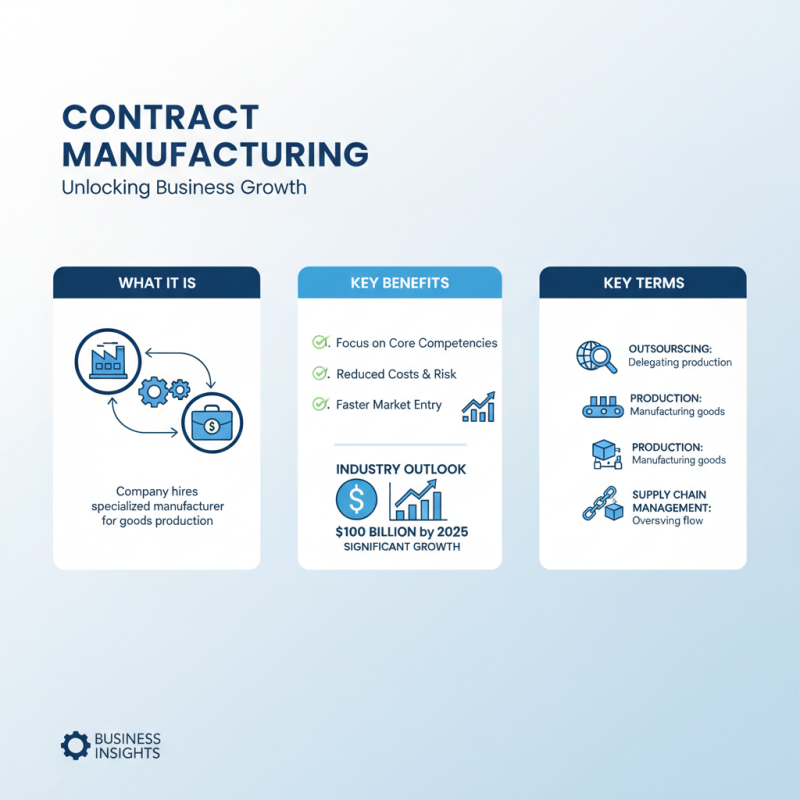
Contract manufacturing plays a vital role in modern business. It allows companies to focus on core competencies while outsourcing production. This practice has grown significantly, with the industry expected to reach $100 billion by 2025. Understanding contract manufacturing starts with knowing key terms like outsourcing, production, and supply chain management.
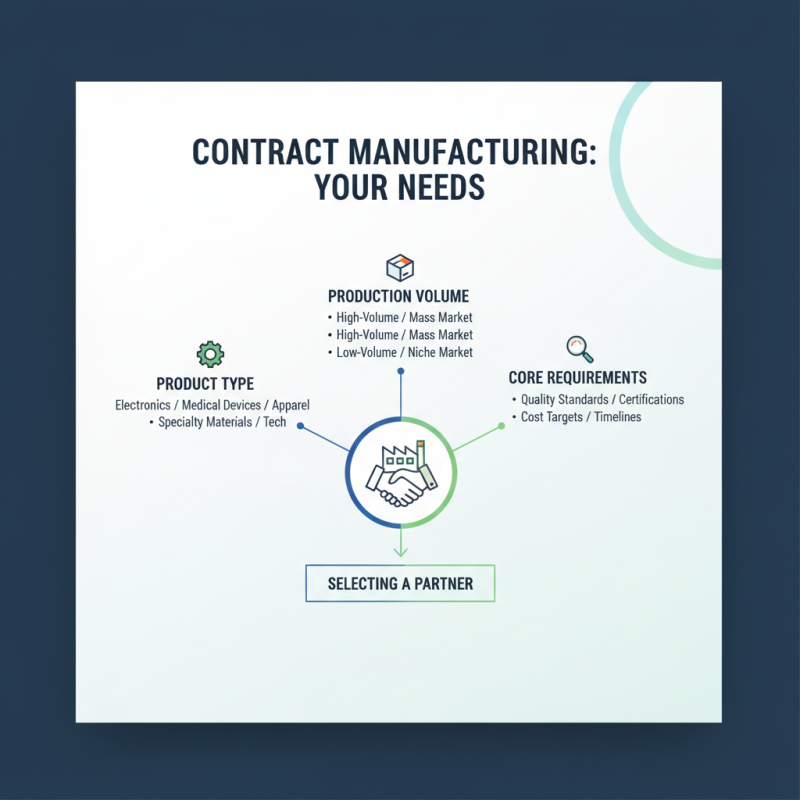
It's crucial to assess the capabilities of potential partners. Some manufacturers specialize in certain industries, while others might spread across various sectors. Data shows that companies face a 20% higher risk when partnering without thorough research. Factors such as quality control, production capacity, and geographical location can influence the choice.
Communication is another cornerstone of a successful partnership. Frequent, transparent interactions can prevent misunderstandings that may lead to delays. A study indicated that businesses often underestimate the significance of clear communication, leading to a 30% increase in project failure rates. Potential partners should be evaluated not just on price but also on how well they align with your business values and production needs.
Evaluating Potential Manufacturing Partners: Key Criteria and Metrics
When evaluating potential manufacturing partners, several key criteria should guide your decision. Start with
production capabilities. Does the partner have the necessary technology and skills?
Visit their facility to see their process in action. Understand their capacity. Can they handle your volume? A partner with
limited resources might struggle to meet your demands, impacting your timeline.
Quality assurance is crucial. Look for a partner with strict quality control measures.
Ask about their certifications and testing protocols. A history of defects could signal future problems. Communicate clearly
about your quality requirements and ensure they are prepared to meet them consistently.
Consider financial stability as well.
A partner facing financial strain may not invest in better equipment or improvements. This affects long-term reliability.
Transparency is essential. Try to gauge their willingness to share information
openly. Avoid partners who seem evasive about their operations. Each of these factors plays a significant role in your
overall satisfaction and success.
Assessing Quality Control Standards and Compliance in Partners
Choosing the right contract manufacturing partner demands careful evaluation, with a focus on quality control and compliance. A recent report from the International Organization for Standardization indicated that 75% of manufacturing defects arise from poor quality control processes. This statistic highlights the importance of scrutinizing potential partners’ quality assurance practices.
When assessing a contract manufacturer, inquire about their quality management system. A partner should follow established standards such as ISO 9001. This certification indicates a commitment to maintaining high quality. However, not all ISO-certified companies deliver consistent results. Some might lack rigorous internal audits or employee training programs. The human element plays a crucial role in manufacturing quality.
Compliance with industry regulations is equally pivotal. The FDA or equivalent regulatory bodies set stringent guidelines that must be followed in many sectors. According to a study published by the Compliance Insights Group, nearly 30% of companies failed compliance audits due to insufficient documentation. This can lead to costly delays. Ensure your partner can demonstrate a track record of compliance, not just certifications. Engaging with partners who prioritize quality and actively manage compliance helps mitigate risks for your business.
How to Choose the Right Contract Manufacturing Partner for Your Business? - Assessing Quality Control Standards and Compliance in Partners
| Criteria |
Description |
Rating (1-5) |
Comments |
| Quality Assurance |
Evaluation of the partner's quality control processes and certifications. |
4 |
Strong quality practices; ISO 9001 certified. |
| Compliance Standards |
Adherence to regulatory requirements and industry standards. |
5 |
Fully compliant with FDA and other regulations. |
| Capacity and Capability |
Ability to handle production volume and complexity. |
4 |
Robust manufacturing facilities. |
| Communication |
Effectiveness of communication and responsiveness. |
3 |
Moderate response times, needs improvement. |
| Cost Structure |
Transparency and competitiveness of pricing. |
4 |
Good value for the quality offered. |
| Reputation |
Feedback and reviews from past clients. |
5 |
Highly recommended by peers in the industry. |
Analyzing Cost Structures and Financial Health of Manufacturing Firms
Choosing the right contract manufacturing partner is crucial. Analyzing their cost structure and financial health can reveal much about their reliability. According to a recent report by Deloitte, nearly 70% of companies fail to evaluate their partners’ financial standings effectively. This oversight can lead to delayed production and increased costs. Firms should request financial statements and assess key indicators like profit margins.
Cost structures vary widely among manufacturers. A study from McKinsey highlights that average gross margins in contract manufacturing range from 10% to 25%. Understanding these margins helps in negotiations. Companies often overlook hidden costs, such as logistics or tariff expenses, which can significantly impact overall pricing. Transparency in these areas is essential for a successful partnership.
Identifying red flags is vital. A firm with escalating debt levels may struggle to meet commitments. According to IBISWorld, 40% of contract manufacturers face cash flow issues. Companies must be vigilant and conduct thorough assessments. This process may feel overwhelming but is necessary for long-term stability. Regular audits of financial health are recommended. They can make a real difference in choosing a trustworthy partner.