How to Choose the Best Mineral Oil Based Defoamer?
Choosing the right Mineral Oil Based Defoamer is rarely a matter of selecting the strongest product. It is a practical formulation decision involving foam control, compatibility, surface appearance, and process stability. A defoamer that performs well in wastewater treatment may fail in architectural coatings, paper chemicals, adhesives, or metalworking fluids.
Dr. K. C. Patton, a respected coatings and dispersion specialist, stated, “The best defoamer is the one that does its job without creating other problems.” This principle remains highly relevant. A suitable product should collapse persistent foam without causing craters, fisheyes, gloss loss, sedimentation, or poor recoating. It should also remain stable during storage and mixing.
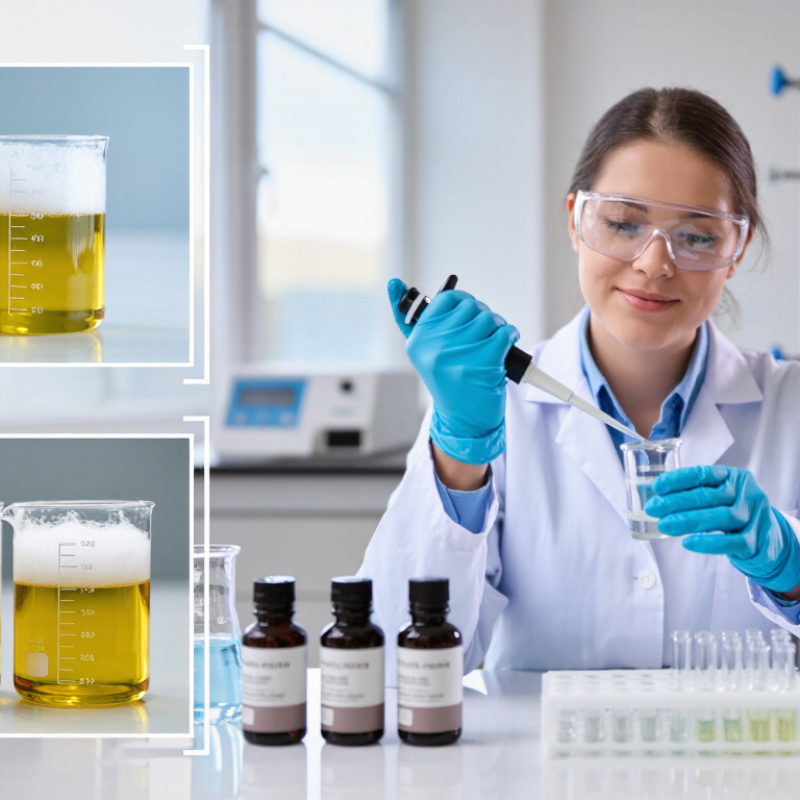
The selection process should begin with the application conditions. Check the formulation’s viscosity, surfactant level, pH, temperature, and shear intensity. Then compare mineral oil viscosity, hydrophobic particle content, emulsifier type, and dosage range. Small laboratory trials are essential. Add the defoamer gradually, observe foam decay, and inspect the dried film under angled light.
Do not trust a single quick test. Foam may disappear immediately but return during pumping or filling. That weakness is easy to miss. Pilot-scale testing can reveal it.
A careful buyer should request technical data, safety documentation, batch consistency information, and application guidance from a qualified supplier. Still, supplier data cannot replace your own testing. Even an experienced formulator can choose poorly when the process is changing. This guide explains how to evaluate performance honestly, compare candidates fairly, and select a Mineral Oil Based Defoamer that fits real production demands.
Understanding How Mineral Oil–Based Defoamers Work
How to Choose the Best Mineral Oil Based Defoamer?
Understanding How Mineral Oil–Based Defoamers Work
Mineral oil–based defoamers do more than suppress visible bubbles. They interrupt foam formation at the liquid–air interface. A typical formulation contains mineral oil, hydrophobic particles, and surface-active components. When droplets enter a foam film, they spread across weak areas. The film drains faster. Neighboring bubbles then merge and collapse. This mechanism explains why a clear tank does not always indicate stable foam control.
Market estimates show why selection deserves process-level testing. Grand View Research valued the global defoamers market at approximately USD 6.1 billion in 2023. MarketsandMarkets estimated about USD 5.9 billion in 2022, with continued growth expected through 2027. Different research boundaries produce different figures. That difference matters. No single market number should determine a formulation decision.
In a paper coating line, high shear can disperse the defoamer too quickly. Poor compatibility may create craters, surface pinholes, or reduced gloss. Check performance at actual temperature, mixing speed, and residence time. ASTM D1173 foam testing can compare initial foam height, but it cannot represent every production condition. Foam height alone can mislead. A slower collapse may still deliver better surface quality. Start with small dosage steps, then inspect the treated film under practical lighting. The lowest dose is not always the best dose.
Identifying the Foaming Conditions in Your Process
How to Choose the Best Mineral Oil Based Defoamer?
Identifying the Foaming Conditions in Your Process
Foam is not a single problem. It may come from surfactants, proteins, suspended solids, or trapped air. Start by recording temperature, pH, viscosity, agitation speed, and line pressure. Note where foam appears. A bright white layer in a mixing tank suggests different conditions from fine bubbles leaving a filter.
Shear and residence time matter greatly. High-speed impellers can pull air below the liquid surface. Warm processing may reduce viscosity, yet it can increase bubble movement. ASTM D892 evaluates foam at 24°C and 93.5°C, measuring foam volume after five minutes of aeration and ten minutes of settling. These conditions provide useful comparison points, but they do not fully represent every production line. That limitation deserves attention. A laboratory result can mislead when plant shear is much higher.
Tips: Collect samples during both stable and foaming periods. Measure foam height every minute for ten minutes. Test several mineral oil defoamer dosages, including a low dose. Check whether the additive causes haze, filter blockage, or surface defects. The European Commission’s food, drink, and milk BAT reference work emphasizes process control, cleaning conditions, and wastewater monitoring. Therefore, track cleaning chemicals separately from product ingredients. In my view, the most useful trial is often the least dramatic one: lower dosage, real process water, and normal production speed.
Comparing Defoamer Formulations and Performance Factors
How to Choose the Best Mineral Oil Based Defoamer?
Mineral oil defoamers differ in oil viscosity, active content, silica loading, and emulsifier balance. These details control foam knockdown, dispersion, and persistence. Grand View Research’s 2024 market report estimates the global defoamer market at approximately US$6.2 billion in 2023. It also projects about 4.8% annual growth through 2030. This growth reflects wider process demands, not automatic product superiority.
Compare formulations under real operating conditions. A low-viscosity formula may spread quickly across a coating tank, while a heavier grade can survive longer shear. Silicone-free mineral oil systems often suit paper, wastewater, coatings, and adhesive processes. However, excessive dosage can create fish eyes, surface defects, or filtration problems. More active content is not always better. That assumption deserves testing.
Run a controlled jar test, then repeat it in the production line. Record foam height, collapse time, temperature, pH, agitation speed, and dosage. ASTM D1173-style foam screening can support early comparisons, but plant validation remains essential. MarketsandMarkets reported continued expansion in water-treatment chemical demand in its 2024 industry analysis, increasing the value of reliable foam control. I have seen fast laboratory results fail under continuous shear. The first result can mislead. Check compatibility after 24 hours, not only after five minutes. Choose the formulation that controls foam without disturbing gloss, adhesion, drainage, or downstream treatment.
How to Choose the Best Mineral Oil Based Defoamer?
Comparing Defoamer Formulations and Performance Factors
The chart uses a comparative performance index from 0 to 100. Mineral oil combined with hydrophobic silica generally provides stronger foam knockdown and longer-lasting foam control, while surfactant-modified formulations can offer better compatibility and easier dispersion. Actual results depend on dosage, process shear, temperature, pH, and the application system.
Checking Compatibility, Safety, and Application Requirements
Choosing a mineral oil based defoamer starts with compatibility, not foam collapse speed. Test it against the complete formulation.
A small jar test can reveal separation, haze, odor, or delayed recoating. Check pH, temperature, shear, and electrolyte levels. These factors often change defoamer behavior. In waterborne coatings, add the defoamer before and after pigment dispersion. Compare gloss, cratering, leveling, and foam height after 24 hours. A 2023 technical review in the Journal of Coatings Technology and Research reported that defoamer performance depends strongly on particle size, surface tension, and dispersion stability. That detail is easy to overlook.
Safety requires more than reading the product label. Request the current Safety Data Sheet and review hydrocarbon composition, flash point, aspiration hazards, and workplace exposure controls. The European Chemicals Agency’s guidance emphasizes using exposure scenarios and substance classification when selecting chemical mixtures. For food-contact or personal-care processes, verify applicable regulations and migration limits separately. “Food grade” is not a universal approval.
Application conditions matter. High-speed mixing may need rapid foam knockdown, while printing or coating lines may require low surface defects. In wastewater treatment, monitor chemical oxygen demand and downstream biological activity. The U.S. EPA’s Effluent Guidelines data show that industrial discharges can vary widely by sector, so one dosage cannot fit every plant. Start with the lowest effective level, then confirm results through pilot trials. Field data can disagree with laboratory results. That is normal. Record both.
Testing, Selecting, and Optimizing the Right Defoamer
How to Choose the Best Mineral Oil Based Defoamer?
Selecting a mineral oil based defoamer should begin with the process, not the supplier’s dosage chart. MarketsandMarkets’ 2024 Antifoaming Agents Market report estimates growth from about USD 6.1 billion in 2024 to USD 7.8 billion by 2029. This expansion reflects wider industrial use, but market growth does not guarantee process suitability. Test each candidate at actual temperature, pH, shear, and electrolyte levels. Measure initial foam height, collapse time, surface defects, turbidity, and filtration behavior. ASTM D892 and ASTM D1173 can provide useful laboratory references, although neither fully reproduces every production line.
Small differences matter. Dose in controlled steps, such as 50, 100, and 200 ppm. Record results after five minutes and again after one hour. A product that collapses foam quickly may create oil spots, poor coating uniformity, or downstream filter blockage. The reverse can also happen. A slower defoamer may offer better persistence and lower total consumption. A clean beaker result can still mislead. Real systems contain contaminants, changing solids, and unstable residence times. Review safety data, storage stability, and compatibility with pumps and seals. Then run a short plant trial with fixed feed rates and operator observations. Do not optimize only for the lowest purchase price. Calculate cost per treated ton, including rework, cleaning, and product loss. Industrial application studies consistently show that performance depends on formulation, dosage, and operating conditions, not chemistry alone.
My own preference is cautious: repeat borderline tests, because one successful batch proves very little.
