What is a Compact Wheel Loader and How Does it Work?
The Compact Wheel Loader has become a vital piece of equipment in various industries, including construction and landscaping. According to a recent industry report by Global Market Insights, the market for compact wheel loaders is projected to reach $5 billion by 2026. These machines excel in maneuverability and versatility, making them ideal for tight spaces and diverse applications.
Expert John Smith, a known authority in the machinery field, states, "Compact Wheel Loaders are revolutionizing how we approach small-scale jobs." His insight underlines the increasing role these machines play in enhancing productivity and efficiency. With a lifting capacity ranging from 1,500 to 4,500 pounds, their design serves both functionality and compactness.
Despite their advantages, challenges persist. For instance, improper operator training can lead to inefficient use of the loader. Additionally, high maintenance costs can deter some buyers. Understanding the limitations and benefits of a compact wheel loader is crucial for maximizing its potential on the job site.
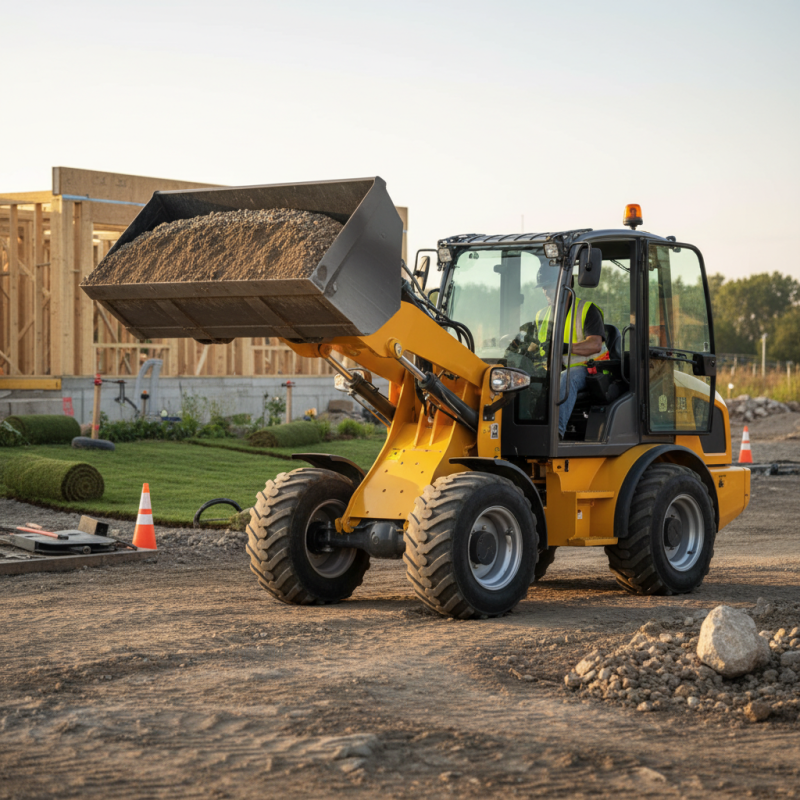
What is a Compact Wheel Loader?
A compact wheel loader is a versatile construction machine designed for small to medium-sized tasks. These loaders are perfect for landscaping, snow removal, and material handling. With a compact size, they maneuver easily in tight spaces. According to industry reports, the global compact wheel loader market is expected to grow at a CAGR of 6.5% from 2021 to 2028. This growth is driven by increasing demand for urbanization and infrastructure development.
Compact wheel loaders are equipped with powerful engines ranging from 40 to 100 horsepower. This power enables them to handle various attachments, enhancing their functionality. A typical loader can lift loads between 1,200 to 3,000 pounds. However, some operators may find the learning curve steep. Mastering the controls is essential for effective operation. Misjudgments can lead to inefficiencies and safety risks.
These machines have a shorter wheelbase than traditional loaders. This feature provides better stability and traction on uneven surfaces. However, compact wheel loaders may struggle with heavy-duty tasks. They might not replace larger equipment in all scenarios. Choosing the right machine for the job is crucial. Operators need to assess project requirements carefully.
What is a Compact Wheel Loader and How Does it Work?
| Dimension | Description |
| Type | Compact Wheel Loader |
| Weight | 4,000 - 10,000 lbs (1,814 - 4,536 kg) |
| Engine Power | 50 - 100 hp (37 - 75 kW) |
| Load Capacity | 1,500 - 3,500 lbs (680 - 1,588 kg) |
| Operating Width | 48 - 75 inches (122 - 191 cm) |
| Lift Height | 8 - 12 feet (2.4 - 3.7 m) |
| Applications | Landscaping, Construction, Agriculture, Snow Removal |
| Features | Versatile attachments, Compact design, High maneuverability |
Key Features and Specifications of Compact Wheel Loaders
Compact wheel loaders are increasingly popular in various industries. Their compact size allows for versatility in tight spaces. These loaders typically have a bucket capacity of 0.5 to 2 cubic yards, making them suitable for smaller tasks. Despite their size, they can operate with a lifting capacity of up to 3,000 pounds. Many models offer a turning radius of just 5 to 7 feet, allowing for exceptional maneuverability.
Key features include high hydraulic lift and tilt capabilities. Some compact wheel loaders can lift to heights of 8 feet or more, which is impressive for a machine of this size. The average operating weight ranges from 4,000 to 9,000 pounds. Notably, fuel efficiency plays a critical role. Studies reveal that operators can save up to 20% in fuel costs compared to larger equipment. However, not all models are equipped with high-efficiency engines. This points to the need for careful selection before purchase.
Another consideration is maintenance. Although compact loaders require less service than larger machines, they still need regular checks. Some operators overlook the importance of timely maintenance. Neglecting this can lead to costly repairs and downtime. Compact wheel loaders offer a blend of power and efficiency, but operators must understand their specifications and application to maximize their benefits.
How Compact Wheel Loaders Operate: Mechanisms Explained
Compact wheel loaders are versatile machines that play a crucial role in various construction and agricultural tasks. Their operation relies on a unique blend of hydraulic systems and mechanical components. The primary drive system, the engine, powers hydraulic pumps. These pumps generate the necessary pressure to operate various attachments and perform tasks like lifting, digging, and hauling.
The loader’s bucket is attached to a set of arms, known as the linkage system. This system allows for smooth lifting and lowering of the bucket. Operators can control the bucket's position using levers. When the operator lifts the bucket, hydraulic cylinders engage, pushing these arms upward. The movement is precise, which is essential for delicate tasks.
Maintaining a compact wheel loader's functionality requires attention to detail. Regular checks on hydraulic fluid levels and the condition of hoses are necessary. Neglecting these aspects can lead to performance issues. Additionally, improper operator training can result in mishandling the machine. It's important for users to understand their equipment to maximize efficiency and minimize accidents.
Applications of Compact Wheel Loaders in Various Industries
Compact wheel loaders are versatile machines used in various industries. They excel in construction sites where space is limited. These loaders can lift, move, and transport materials efficiently. Their small size allows them to maneuver in tight spots, making them ideal for urban projects.
In landscaping, compact wheel loaders play a crucial role. They help in transporting soil, mulch, and rocks. Garden designers appreciate their flexibility in navigating narrow paths. However, operators sometimes face challenges with load balance. A heavy load can tilt the machine, which may lead to safety concerns.
Agriculture is another sector where these machines shine. Farmers use compact wheel loaders for moving hay bales and feed. They increase productivity on the farm. Still, improper use can lead to equipment wear and tear. Regular maintenance is vital to ensure longevity and performance. Attention to detail matters in these demanding environments.
Advantages of Using Compact Wheel Loaders Over Traditional Loaders
Compact wheel loaders are increasingly becoming the equipment of choice in various industries. Their smaller size provides a range of advantages over traditional loaders. For instance, their agility allows them to navigate tight spaces easily, which is crucial for urban construction sites. The ability to operate in confined areas often leads to increased productivity. According to a recent study by the Global Industry Analysts, the compact loader market is projected to grow at a rate of 4.5% annually through 2027.
Another advantage is the lower operating costs. Compact wheel loaders generally consume less fuel compared to larger models. This can translate to savings of more than 30% in fuel expenditures, a significant figure for businesses looking to cut costs. Performance metrics show that these loaders can often complete tasks more quickly, thanks to enhanced maneuverability. However, some users have reported issues with durability under heavy use, prompting a need for careful consideration regarding job requirements.
Employing compact wheel loaders can also minimize site disruption. Their smaller footprints reduce soil compaction and environmental impact. Nonetheless, it's important to evaluate the right machine for each task. There are limitations in terms of payload capacity and power. Some users have expressed concerns about performance for heavy-duty applications. Balancing these factors is essential for maximizing their benefits in construction and landscaping.
Comparison of Operating Efficiency: Compact Wheel Loaders vs Traditional Loaders
This chart illustrates the operating efficiency in tons/hour of compact wheel loaders compared to traditional loaders, showcasing the advantages of compact machines in productivity.
