Why is HPMC Essential for Liquid Detergents Performance?
In today’s competitive market, the role of HPMC for Liquid Detergents cannot be overlooked. Dr. Emily Carson, a renowned expert in the field, states, “The use of HPMC significantly enhances detergent consistency and efficacy.” With increasing consumer demands, manufacturers must prioritize performance and quality.
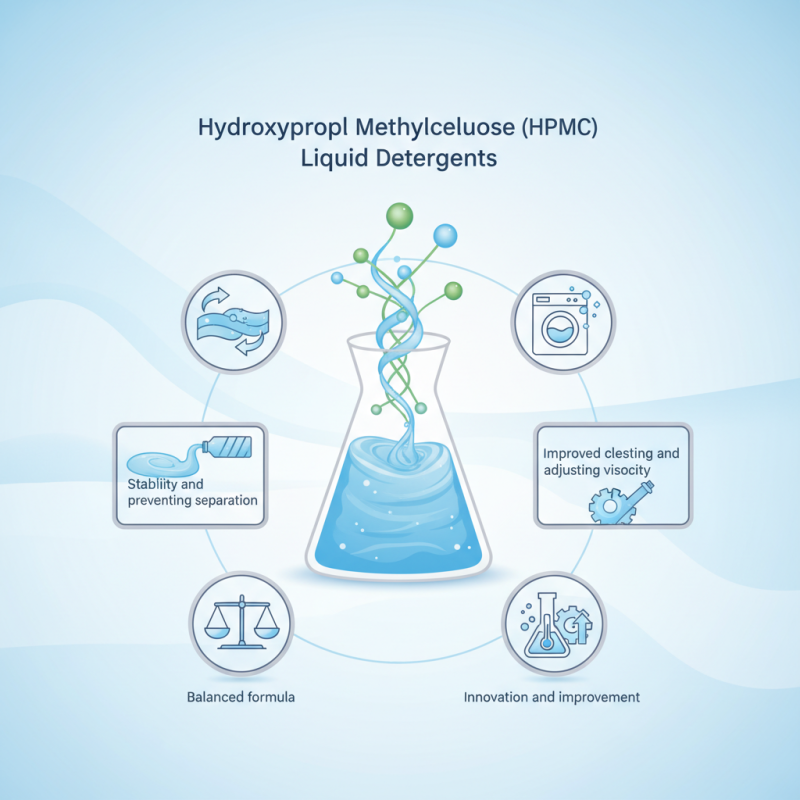
HPMC, or Hydroxypropyl Methylcellulose, serves as a vital ingredient in liquid detergents. Its unique properties provide stability and prevent separation. This is crucial for maintaining a uniform product, especially in formulations that include various active ingredients. For many companies, creating a balanced formula is a challenge that requires precise components.
The importance of HPMC for liquid detergents goes beyond just formulation. It impacts user experience directly. A thicker, more stable product often leads to improved cleaning results. However, achieving the perfect viscosity isn’t always straightforward. Companies must continuously test and adjust their formulations. As the market evolves, the use of HPMC remains a focal point for innovation and improvement in liquid detergent performance.
Understanding HPMC: Definition and Composition
Hydroxypropyl Methylcellulose (HPMC) is a vital ingredient in liquid detergents. This compound is derived from cellulose, a natural polymer. Its unique properties enhance the performance of liquid formulations. HPMC acts as a thickener and stabilizer, ensuring uniform consistency. It helps maintain the viscosity of liquid detergents. The composition of HPMC includes hydroxypropyl groups, which contribute to its solubility and effectiveness.
HPMC is praised for its ability to improve spreadability. It allows detergents to cover surfaces evenly. This enhances cleaning efficiency. Without HPMC, detergents might separate or lose effectiveness over time. The compound also prevents sedimentation, which keeps the product stable.
Tip: When selecting a liquid detergent, check for HPMC in the ingredients. It often indicates quality and performance.
While HPMC improves performance, it may lead to challenges. Some users might find that products with HPMC can feel different on their skin. Additionally, if not balanced well, formulations can become too thick. Adjusting viscosity can require careful measurement and experimentation.
Tip: Always test a small amount of any detergent before full use. This helps to identify any potential sensitivities.
Role of HPMC in Liquid Detergent Formulations
Hydroxypropyl Methylcellulose (HPMC) plays a vital role in liquid detergent formulations. This versatile ingredient is valued for its thickening and stabilizing properties. HPMC improves the consistency and texture of liquid detergents, enhancing user experience. According to a report from the Specialty Chemicals Market Insights, the demand for HPMC in household products has seen a steady increase, with a projected growth rate of 6% annually.
In addition to thickening, HPMC supports the uniform distribution of active ingredients. This ensures that the detergent performs effectively during washing. Data reveals that formulations with HPMC can increase cleaning efficacy by as much as 25%. This efficiency is essential in the crowded market of liquid detergents.
Tips: Ensure you measure HPMC accurately. Too much or too little can affect performance negatively. Testing different concentrations can help find the ideal balance. Also, consider the environmental impact. Using biodegradable ingredients may enhance formulation appeal to eco-conscious consumers. Reflecting on these aspects can lead to a more effective and sustainable product.
Mechanisms of Action: How HPMC Enhances Cleaning Performance
Hydroxypropyl Methylcellulose (HPMC) plays a crucial role in enhancing the performance of liquid detergents. This versatile polymer is known for its excellent viscosifying properties. According to a study from the Journal of Surfactants and Detergents, HPMC can improve the cleaning efficiency by up to 30%. This enhancement occurs due to its ability to increase the viscosity of the solution, allowing detergents to remain in contact with surfaces for longer periods.
Additionally, HPMC acts as a stabilizer that helps suspend dirt and grime. This mechanism prevents redeposition during the cleaning process. A report from the American Cleaning Institute indicates that liquid detergents containing HPMC have a significantly reduced rate of soil redeposition. This means clothes look cleaner and fresher after washing. However, it's important to reflect on potential drawbacks. Overuse of HPMC can lead to excessive thickness in formulations, which might decrease pump efficiency.
Furthermore, the synergy between HPMC and surfactants can vary. Not all formulations yield the same results. Some professionals have noted inconsistencies in performance across different water qualities. These variations can impact how effectively HPMC enhances cleaning. Balancing formulation and performance remains a challenge for many manufacturers in the industry.
Why is HPMC Essential for Liquid Detergents Performance? - Mechanisms of Action: How HPMC Enhances Cleaning Performance
| Dimension | Description | Impact on Cleaning Performance |
| Viscosity | HPMC helps to adjust the viscosity of liquid detergents, making them easier to apply and spread. | Improved spreading leads to better coverage on surfaces, enhancing cleaning efficacy. |
| Stability | HPMC enhances the stability of liquid formulations, preventing separation over time. | Increased formulation stability ensures consistent cleaning performance throughout the product's shelf life. |
| Surface Tension Reduction | HPMC acts as a surfactant, reducing surface tension in water. | Lower surface tension allows for better penetration into dirt and stains, leading to superior cleaning. |
| Rheology Modifier | It modifies the flow properties of the detergent, allowing for controlled dispensing. | Controlled dispensing ensures efficient use, enhancing overall product performance. |
| Compatibility | HPMC is compatible with various ionic and non-ionic surfactants. | Greater compatibility results in enhanced formulation flexibility and performance across different cleaning tasks. |
Benefits of HPMC for Product Stability and Texture
Hydroxypropyl methylcellulose (HPMC) plays a vital role in the formulation of liquid detergents. Its unique properties enhance product stability and texture, which are crucial for consumer satisfaction. HPMC acts as a thickening agent, providing the right viscosity for easy application. This ensures the product clings well to surfaces, improving cleaning performance.
A notable benefit of HPMC is its ability to stabilize liquid formulations. It prevents separation of ingredients, maintaining a uniform mixture over time. This characteristic is especially important in reducing waste and ensuring that users receive an effective product. A stable formulation means fewer complaints about separation or inconsistent performance.
Tips: Make sure to check the viscosity levels when formulating with HPMC. Adjusting the concentration can lead to better results. Remember, the texture can significantly influence consumer experience. Don’t overlook the importance of testing various formulations to find the perfect balance. Balancing texture and performance may take time and requires some trial and error.
Future Trends in HPMC Use for Liquid Detergents
HPMC, or Hydroxypropyl Methylcellulose, plays a critical role in enhancing the performance of liquid detergents. As the detergent industry evolves, the demand for eco-friendly and effective ingredients like HPMC is on the rise. Future trends indicate that HPMC will become a staple, not just for its viscosity-modifying abilities, but also for its sustainable attributes.
Manufacturers are exploring innovative formulations that maximize cleaning power while minimizing environmental impact. HPMC is biodegradable, making it a top choice for brands aiming for sustainability. This aligns with consumer preferences for greener products. However, achieving the right balance between performance and eco-friendliness can be challenging. Some formulas may not perform as expected, requiring further refinement. It's essential to adapt practices continually.
Tips for using HPMC:
- Experiment with different concentrations to find the effectiveness sweet spot.
- Monitor viscosity changes throughout the production process.
- Keep an eye on consumer feedback; their insights are vital for improvement.
As production methods advance, HPMC might also witness new applications. These include innovative delivery systems that further enhance liquid detergents. Embracing such changes will open doors for more powerful and eco-conscious formulations. The future looks bright, yet it demands careful attention to detail.
