Why Choose Steel Fabrication Machinery for Your Business?

Why Choose Steel Fabrication Machinery for Your Business?

Steel fabrication is becoming more demanding, precise, and data-driven. Customers expect tighter tolerances, faster delivery, and consistent weld quality. Manual methods can still work. However, they often struggle when order volumes rise or designs change quickly.

Industry evidence supports a careful investment in steel fabrication machinery. Deloitte’s 2024 Smart Manufacturing and Operations Survey found that manufacturers increasingly view smart production as a competitive priority. The report also highlights persistent challenges, including skills shortages, integration costs, and cybersecurity risks. These findings matter on a busy workshop floor, where one delayed cutting machine can affect several downstream operations.

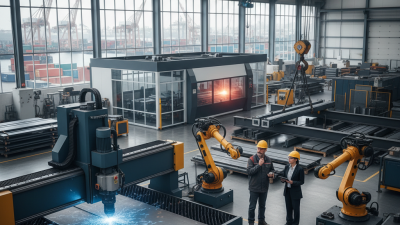
The International Federation of Robotics reported more than 500,000 industrial robots installed worldwide in 2023. Automation is no longer limited to large automotive plants. Fabricators can apply it to robotic welding, plasma cutting, tube processing, and material handling. The right equipment can reduce repetitive work and improve dimensional consistency. It cannot fix poor planning.

That distinction is important.

W. Edwards Deming, a leading quality-management expert, said, “Without data, you’re just another person with an opinion.” His principle applies directly to machinery selection. Production records, maintenance history, scrap rates, and energy use should guide the purchase. A shiny machine is not automatically a profitable machine.

This article examines capacity, automation, safety, operating costs, and workforce requirements. It also considers uncomfortable questions, including whether your current orders justify the investment. Steel fabrication machinery can strengthen a business, but only when technology matches real production needs.
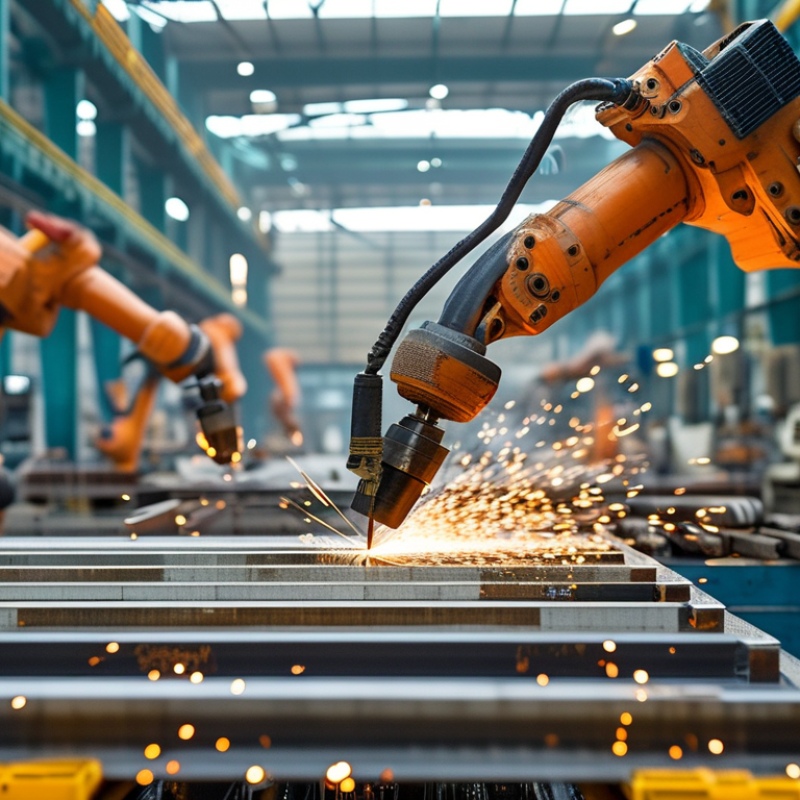
Why Choose Steel Fabrication Machinery for Your Business?

What Is Steel Fabrication Machinery?

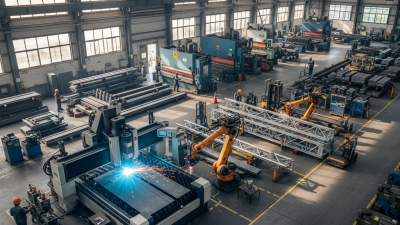
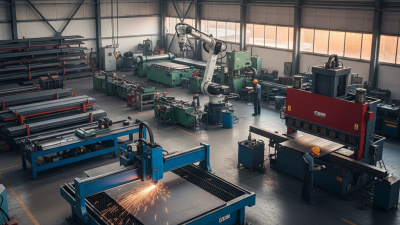
Steel fabrication machinery refers to equipment that cuts, forms, drills, welds, and finishes steel components. A typical workshop may use laser or plasma cutters, press brakes, plate rollers, welding systems, and CNC drilling machines. These tools convert raw sheets, tubes, and beams into frames, brackets, tanks, and structural parts.

The World Steel Association reported nearly 1.9 billion tonnes of crude steel production worldwide in 2024. That scale creates strong demand for accurate and repeatable fabrication processes. CNC systems can follow digital drawings, while sensors check dimensions during cutting or bending. A small error at the drilling stage can misalign an entire frame. That is why measurement tools matter as much as cutting power.

The equipment also affects labor, waste, and workplace consistency. The U.S. Department of Energy identifies steelmaking and fabrication as energy-intensive industrial activities, so efficient machines can reduce unnecessary processing and rework. However, automation is not automatically better. Operators still need practical judgment, maintenance skills, and careful material inspection. A machine may produce the same mistake perfectly. Real workshops often discover this the hard way. Choosing machinery should therefore depend on steel thickness, production volume, part complexity, available floor space, and worker capability.
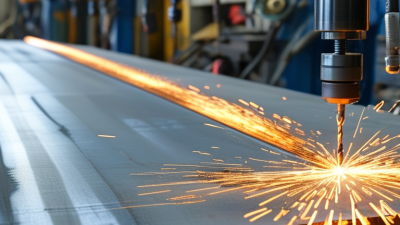
How Steel Fabrication Machinery Supports Business Operations

Steel fabrication machinery supports daily operations by turning design data into repeatable cutting, bending, drilling, and welding processes. Modern equipment can reduce manual handling, improve dimensional consistency, and keep production moving between shifts. The World Steel Association reported global crude steel production of approximately 1.88 billion tonnes in 2024. That scale creates constant pressure for faster and more controlled fabrication.

Speed matters.

Automation also strengthens production planning. CNC systems can store programs, while sensors help operators monitor tool wear, temperature, and positioning errors. The International Federation of Robotics recorded 541,302 industrial robot installations worldwide in 2023. This figure reflects broader manufacturing investment, not steel fabrication alone, but it shows where operations are heading. Connected machinery can support traceability, material scheduling, and quicker responses to urgent orders.

Yet automation is not a magic fix. Poor drawings, incorrect settings, and weak maintenance still create scrap and delays. A machine may be precise, but the workflow around it may not be. Operators need practical training, inspection routines, and clear safety procedures. The International Energy Agency also identifies heavy industry as a major source of global emissions, so energy-efficient equipment deserves attention during purchasing decisions. Businesses should measure cycle time, rework, downtime, and energy use before claiming improvement. That discipline is sometimes overlooked.

Which Types of Steel Fabrication Machines Are Available?

Steel fabrication shops now choose machines by material, thickness, volume, and required tolerance. The World Steel Association reported 1.89 billion tonnes of crude steel production in 2023. That scale creates varied cutting and forming demands.

Fiber laser cutters suit precise profiles and repeatable sheet work. Plasma cutters handle thicker plate at lower initial cost. Oxy-fuel systems remain useful for very heavy sections, though their heat-affected zones need careful inspection. Hydraulic shears cut straight edges quickly. Press brakes then form flanges, channels, and enclosures with controlled bending force. CNC punching machines are practical for repeated holes and small openings. Tube and pipe lasers add value when frames contain many intersecting profiles.

The 2024 Global Automotive Supplier Study by Roland Berger notes continuing pressure for shorter lead times and greater production flexibility. That supports machines with programmable changeovers, but automation is not automatically the best answer. A busy shop may need a reliable saw before an expensive robotic cell. In daily use, operators check nozzle wear, blade alignment, back-gauge accuracy, and fume extraction. Small errors become costly when a batch contains hundreds of parts. Industry 4.0 reports often emphasize connected equipment, yet clean data and trained staff remain weak points. Sometimes, the impressive machine is not the productive one.

Why Choose Steel Fabrication Machinery for Your Business? — Available Machine Types and Typical Capabilities
Machine Type Primary Fabrication Process Typical Material Thickness Typical Accuracy or Repeatability Main Business Advantages Common Applications Key Considerations
CNC Fiber Laser Cutter Uses a focused laser beam to cut sheet and plate with computer-controlled motion. Approximately 0.5–25 mm for mild steel, depending on laser power and machine configuration. Often about ±0.05–0.15 mm in positioning, depending on machine design, material, and operating conditions. Fast production, narrow kerfs, clean edges, low tool wear, and easy digital job changeovers. Electrical enclosures, brackets, automotive parts, architectural components, and general sheet-metal production. Higher initial investment; requires suitable ventilation, assist gases, maintenance, and trained operators.
CNC Plasma Cutter Uses a high-temperature plasma arc to cut electrically conductive metal. Approximately 1–50 mm for mild steel, with heavy-duty systems capable of more. Commonly about ±0.5–1.5 mm, depending on the system, consumables, speed, and plate thickness. High cutting speed and lower equipment cost for medium and thick conductive materials. Structural components, steel frames, machinery parts, brackets, and medium-thickness plate work. Produces more heat-affected material and edge taper than laser cutting; consumables require regular replacement.
CNC Oxy-Fuel Cutter Uses fuel gas and oxygen to heat and oxidize steel along a programmed cutting path. Approximately 6–300 mm or more, depending on torch setup and cutting requirements. Typically lower than laser or plasma; approximately ±1–3 mm is common for general plate cutting. Cost-effective for very thick carbon-steel plate and large-format cutting. Heavy structural steel, bridges, industrial equipment, shipbuilding, and large fabricated assemblies. Generally unsuitable for stainless steel and aluminum; slower cutting speeds and a larger heat-affected zone.
CNC Waterjet Cutter Uses a high-pressure water stream, often mixed with abrasive, to cut material without significant heat input. Commonly up to 100–200 mm, depending on pump power, abrasive system, and material. Often about ±0.1–0.3 mm on standard systems; higher precision depends on machine configuration. Minimal thermal distortion and the ability to cut steel, stainless steel, aluminum, stone, glass, and composites. Heat-sensitive parts, thick plate, precision templates, decorative panels, and mixed-material fabrication. Slower than laser or plasma for many jobs; requires water treatment, abrasive management, and wastewater handling.
CNC Press Brake Forms sheet and plate by pressing the workpiece between a punch and die. Commonly handles sheet and plate from approximately 0.5–25 mm, subject to bending force and machine length. Typical bend-angle repeatability is approximately ±0.5–1.0 degrees, with better results on advanced systems. Consistent bends, reduced manual setup, improved repeatability, and efficient production of complex profiles. Cabinets, channels, frames, covers, brackets, and precision sheet-metal assemblies. Tooling selection, springback, bend allowance, material grain, and required tonnage must be considered.
CNC Hydraulic or Mechanical Shear Cuts sheet or plate using opposing blades with controlled blade gap and rake angle. Approximately 0.5–25 mm, depending on machine capacity and material strength. Typical cut-length accuracy is about ±0.1–0.5 mm when properly set up. Rapid straight cuts, simple operation, and efficient preparation of blanks for downstream forming. Sheet-metal blanks, structural plates, ductwork, enclosures, and general fabrication. Primarily suited to straight cuts; blade condition and correct clearance strongly affect edge quality.
CNC Tube and Profile Laser Cutter Laser-cuts round, square, rectangular, and other hollow or open structural profiles. Commonly processes tubes and profiles with wall thicknesses of approximately 0.8–12 mm. Often about ±0.05–0.15 mm in positioning, depending on tube size, workholding, and machine configuration. Combines cutting, slotting, drilling, and marking in one setup, reducing secondary operations. Furniture frames, roll cages, structural assemblies, handrails, and modular steel products. Requires accurate tube loading, alignment, nesting software, and suitable support for long profiles.
CNC Drilling and Milling Machine Performs programmed drilling, tapping, countersinking, milling, and marking operations. Suitable for structural sections and plates; practical limits depend on spindle capacity and work envelope. Typical hole-position accuracy ranges from approximately ±0.1–0.5 mm. Improves hole-location consistency and reduces manual layout, drilling, and rework. Base plates, connection plates, structural beams, flanges, and machinery components. Tool selection, chip removal, coolant requirements, and workpiece fixturing affect productivity and accuracy.

Note: The performance figures shown are typical industry ranges for general guidance. Actual capacity, accuracy, speed, and operating cost depend on machine specifications, material grade, thickness, tooling, programming, maintenance, and operator experience.

What Benefits Can Businesses Gain from Using These Machines?

Steel fabrication machinery can change how a workshop handles cutting, bending, drilling, and welding tasks. In daily production, the clearest benefit is consistency. A programmed machine can repeat hole positions within tight tolerances across many steel members. This reduces fitting problems during assembly and limits costly rework. It also helps operators process heavier sections with less physical strain. Safer handling matters when plates are large, sharp, or difficult to move. With sensors, guards, and documented procedures, teams can reduce avoidable workplace risks. Compliance still depends on trained people, inspections, and responsible supervision.

The financial benefit appears through faster throughput and more predictable labor planning. A machine may complete a batch in hours instead of several shifts. That difference can improve delivery reliability and customer confidence. Digital settings also make production data easier to track. Managers can compare cycle times, scrap rates, and maintenance patterns before making decisions. However, the gains are not automatic. Poor calibration, rushed setup, or neglected tooling can create expensive defects. I have seen accurate equipment produce poor work because drawings were unclear. That lesson is easy to miss. Businesses should budget for operator training, preventive maintenance, ventilation, and quality checks. They should also test a machine against real steel grades, thicknesses, and workshop conditions before expanding production.

How to Choose the Right Steel Fabrication Machinery for Your Needs

Choosing steel fabrication machinery starts with the workpiece, not the machine catalog. Measure daily tonnage, plate thickness, profile sizes, tolerances, and available floor space. In my production audits, mismatches often appear at the loading table. A machine rated for 25 mm plate may struggle with warped 20 mm sheets. Real conditions matter.

The World Steel Association reported 1.89 billion tonnes of crude steel in 2023. That figure shows this market’s scale and pressure. Yet volume alone should not drive your purchase. Analyze your order mix, batch sizes, and changeover frequency. Compare cutting, drilling, bending, welding, and material-handling systems as one workflow. ISO 9001 records, maintenance logs, and sample-test results reveal more than brochure speed. The International Energy Agency reports that industry uses about 37% of global final energy. Energy draw, idle consumption, and extraction needs deserve a line in your cost model. Ask for a timed demonstration using your steel grade and typical geometry. A fast test piece proves little.

Tips: Create a weighted scorecard. Give quality 30%, uptime 25%, safety 20%, energy 15%, and service 10%. Adjust those weights when your orders are unusual. Leave a contingency for installation delays. I would inspect one machine after a long production shift, not during a polished showroom trial. That step can expose heat, vibration, chip buildup, or awkward cleaning points.

Why Choose Steel Fabrication Machinery?

Selecting machinery according to material thickness and production requirements helps balance cutting capacity, accuracy, speed, and operating cost.

The chart shows representative maximum mild-steel cutting thicknesses commonly used for initial equipment planning: fiber laser about 25 mm, plasma about 50 mm, oxy-fuel about 300 mm, and waterjet about 150 mm. Actual performance varies by power, material grade, cut quality, and machine configuration. Always verify the final specification with the equipment datasheet.