Global food brands are outsourcing more than production. They are buying speed, specialist equipment, and dependable capacity. Grand View Research estimated the global food contract manufacturing market at USD 241.4 billion in 2023, projecting a 9.1% compound annual growth rate through 2030. These figures describe a broad market, not a guarantee of supplier performance.
That distinction matters. A glossy factory tour cannot reveal every changeover, allergen-control step, or missed shipment. Food-safety expert Frank Yiannas has emphasized, “Food safety is not a competitive advantage; it is a basic requirement.” Buyers should test that principle against documented controls, audit findings, traceability exercises, and corrective-action records. Details count.
This 2026 guide compares leading food contract manufacturers for global buyers. It considers product capabilities, regional production footprints, packaging options, quality systems, and the practical demands of scaling. A powder line may suit a dry-mix launch, while a ready-meal brand needs different process controls and cold-chain coordination. No supplier fits every brief. Even strong manufacturers can have limits in minimum order quantities, available capacity, or local market coverage. Treat rankings as a starting point, then verify claims directly. The best partnership is not always the largest one; it is the one that can reproduce your product consistently, communicate problems early, and support realistic growth.
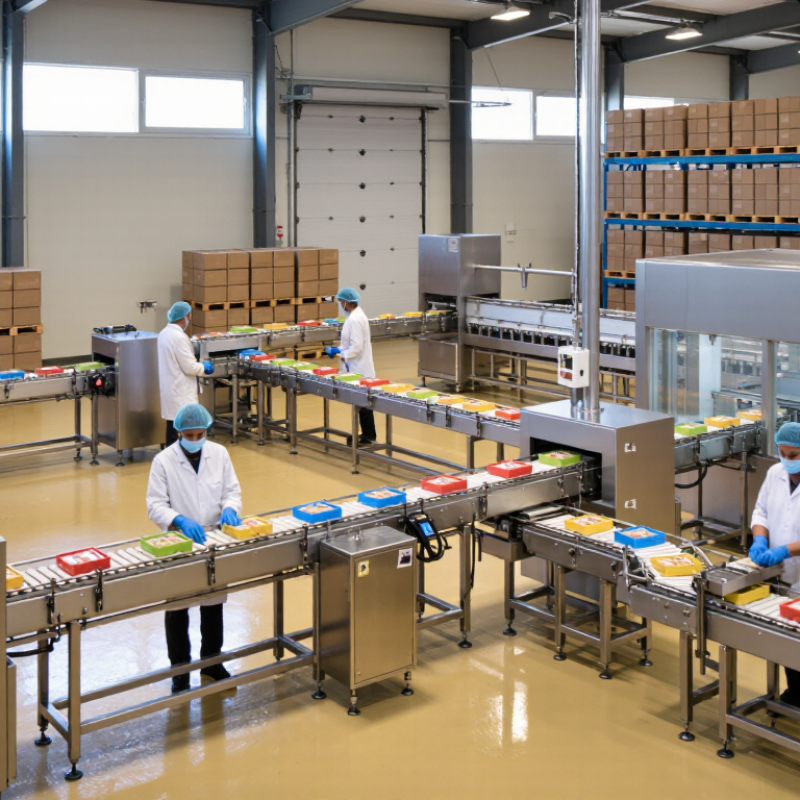
In 2026, food contract manufacturing means partnering with a specialist to make and package products to agreed specifications. The manufacturer may manage ingredients, production scheduling, processing, quality checks, and packaging. The exact scope varies. Buyers should confirm who handles each task before production begins.
A practical partnership starts with a clear product brief: ingredient tolerances, texture, pack size, shelf-life goals, and target markets. A test batch can reveal problems that spreadsheets miss, such as sauce separating after heating or labels becoming difficult to read on a curved jar. Useful questions cover production capacity, traceability records, allergen controls, and how changes are documented. Small details matter.
For global buyers, the arrangement also requires early discussion of market-specific requirements, shipping conditions, and required product documentation. Responsibilities should be written down, not assumed from a sales call. A factory audit can provide useful evidence, but it cannot guarantee every future batch will be perfect. That deserves attention. Buyers should review performance over time, including deviations, corrective actions, and delivery consistency. Some plans will need revision once real production exposes weak spots. That is normal, though not always convenient.
| Buyer Consideration | What Contract Manufacturing Means | Practical Due-Diligence Checks | Relevant Framework or Reference |
|---|---|---|---|
| Product development and formulation | A manufacturing partner may develop or adapt a formula, assess ingredient functionality, and help translate a product brief into a production-ready specification. | Confirm ownership and permitted use of formulas, ingredient substitutions, product specifications, sample approval steps, and change-control procedures. | Written product specifications and quality agreements; applicable food-safety and labeling requirements in each target market. |
| Ingredient sourcing and traceability | The partner may procure ingredients and packaging, or manufacture using materials supplied by the buyer. Responsibilities should be defined for each input. | Review approved-supplier controls, ingredient documentation, lot coding, traceability records, and the process for handling supplier changes. | For covered U.S. facilities, traceability and preventive-control requirements may apply under the FDA’s 21 CFR Part 117. Applicable requirements depend on the product and operation. |
| Food safety systems | Production takes place under documented controls intended to manage biological, chemical, and physical hazards and protect product safety. | Check the site’s hazard analysis, preventive controls or HACCP plan as applicable, sanitation procedures, monitoring records, corrective actions, and audit scope. | U.S. FDA 21 CFR Part 117 for covered operations; Codex General Principles of Food Hygiene and its HACCP system; ISO 22000 where applicable. |
| Third-party certification | Some buyers require an independently audited food-safety certification scheme in addition to compliance with applicable laws. | Verify the certificate’s validity, manufacturing-site address, product or process scope, audit status, and whether the buyer accepts the scheme. | GFSI benchmarks food-safety certification programme requirements; it does not itself certify manufacturing sites. Confirm the current status of any scheme directly with its programme owner. |
| Allergen management | The manufacturer should control allergen risks during receiving, storage, scheduling, production, cleaning, and labeling. | Review allergen segregation, changeover and cleaning validation or verification, rework controls, label checks, and cross-contact risk assessment. | U.S. allergen labeling requirements include the nine major food allergens defined in federal law. Other markets may have different allergen lists and declaration rules. |
| Label and market compliance | Manufacturing services can include label review, but the brand owner and other parties may retain legal responsibilities depending on the market and arrangement. | Agree who approves ingredient statements, allergen declarations, nutrition information, claims, language versions, and final artwork before production. | U.S. requirements include applicable FDA food-labeling rules. In the EU, Regulation (EU) No 1169/2011 sets food-information requirements for consumers. |
| Import and supplier verification | Cross-border sourcing adds documentation and verification obligations that should be assigned clearly between the buyer, importer, and manufacturer. | Identify the importer of record, required product documents, facility-registration or listing obligations where applicable, and responsibility for supplier verification. | Under the U.S. Foreign Supplier Verification Programs rule, the U.S. importer generally has FSVP responsibilities, subject to applicable exemptions and modifications. |
| Capacity and production planning | The partner allocates equipment, labor, and production time to manufacture agreed quantities; capacity depends on the process, product, and site. | Request a site-specific capacity plan, minimum order quantities, lead-time assumptions, seasonal constraints, and a process for managing forecast changes. | Capacity and lead times are commercial and site-specific; validate them against the proposed line, product format, and production schedule. |
| Quality testing and release | The parties define testing, acceptance criteria, batch release, retained samples, nonconformance handling, and complaint investigation responsibilities. | Agree on test methods, sampling plans, certificates of analysis where relevant, release authority, deviation notification, and record-retention periods. | Requirements should be documented in the quality agreement and aligned with applicable regulations, product specifications, and validated processes. |
| Packaging and shelf life | The manufacturer may source packaging, fill and seal products, and support shelf-life evaluation based on the product and packaging system. | Confirm packaging specifications, food-contact compliance for intended markets, seal or closure checks, storage conditions, and the basis for shelf-life claims. | Food-contact-material rules vary by market. Shelf life should be supported by appropriate product-specific evidence rather than assumed from packaging alone. |
| Recall readiness and business continuity | The manufacturing agreement should define how safety incidents, withdrawals, recalls, and major supply interruptions are communicated and managed. | Check traceability exercise results, emergency contacts, notification timelines, recall roles, backup arrangements, and procedures for preserving relevant records. | Recall and recordkeeping obligations vary by jurisdiction and product. Responsibilities should be explicit in the contract and supporting quality agreement. |
| Commercial terms and intellectual property | The contract sets out pricing, volumes, payment terms, ownership of buyer-provided materials, confidentiality, and rights to formulas or process improvements. | Clarify forecast commitments, price-adjustment rules, scrap and yield assumptions, tooling ownership, exclusivity, termination, and post-termination inventory handling. | These are negotiated commercial terms; obtain legal review for the relevant jurisdictions and define them separately from technical product specifications. |
This comparison is a buyer due-diligence guide, not a ranking of individual manufacturers. Regulatory applicability depends on the product, facility, role in the supply chain, and destination market; verify current requirements before contracting.