Choosing a steel stamping machine is not simply a matter of buying the press with the highest tonnage. Buyers must match press capacity, bed dimensions, stroke, and operating speed to the part, material, and production volume. A small mismatch can mean uneven forming, wasted sheet metal, or frequent setup changes. Details matter.
Manufacturing researcher Dr. Shreyes Melkote’s work offers a useful process-focused perspective. A concise paraphrase—not a verbatim quotation—is: “A press is only as useful as the process it can control.” That principle guides this overview of seven steel stamping machines for global buyers. It highlights machine type, controls, feeding options, tooling compatibility, and access to service support. Buyers should also confirm electrical requirements, operator safeguards, documentation, and spare-parts availability before comparing offers. A polished specification sheet is not enough.
The best choice depends on the job. A high-speed line may suit repetitive components, while a mechanical or hydraulic press may better fit different forming needs. Look closely at sample parts, tolerances, and realistic output—not just catalog figures. Ask how quickly the supplier can provide technical assistance. And check the fine print.
This guide provides a practical shortlist, not a universal ranking. Supplier claims still need independent checking, and some comparisons may miss local service realities. That is a limitation worth acknowledging. The right steel stamping machine should fit the production floor, the team’s experience, and the parts that must leave the line consistently.
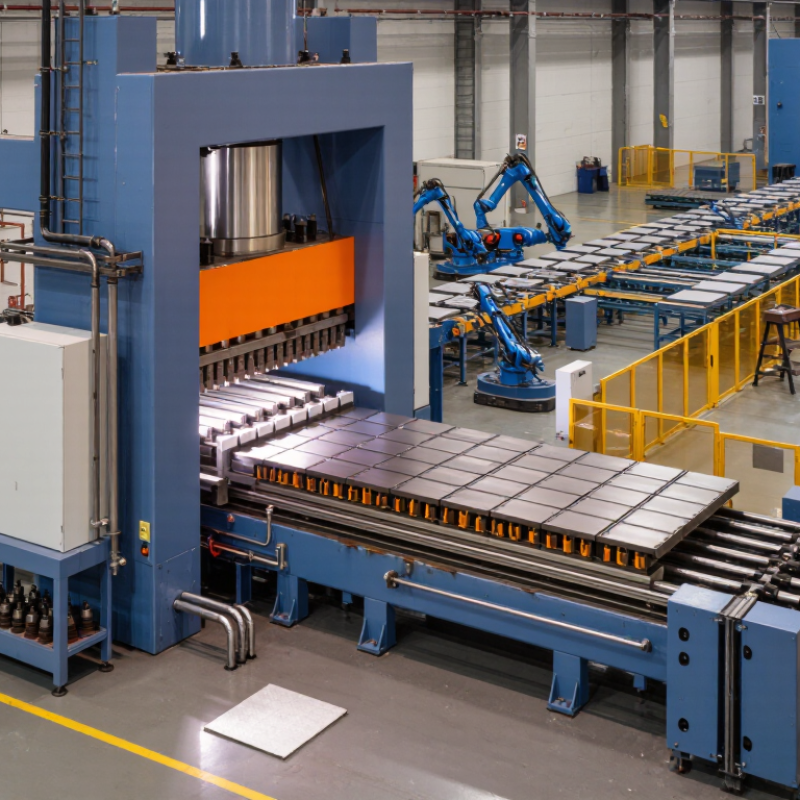
A steel stamping machine shapes sheet or coil steel by pressing it between a punch and a die. The die holds the desired profile, while the punch applies force to cut or form the metal. Common operations include blanking, piercing, bending, and shallow drawing. A finished part may have a clean outline, formed edges, or holes made in one press cycle. That sounds simple. It isn’t.
In a mechanical press, a motor drives a flywheel and crank that move the slide up and down. Hydraulic presses use fluid pressure to control the slide’s force and movement. Operators feed steel into the die manually or through an automated feeder, then the slide closes and completes the stroke. Sensors and guards help monitor the process, but correct setup still matters. A misaligned strip can damage a die or produce uneven parts. Small differences in steel thickness can also affect results.
Machine choice depends on the material, part shape, production volume, and required accuracy. A fast mechanical press may suit repeated, high-volume blanking, while a hydraulic press can offer more control during forming. In practice, setup often takes adjustment: feed alignment, die clearance, and press speed all influence the result. Even a sharp-looking sample can hide burrs or inconsistent dimensions, so inspect parts across the run, not just at startup.
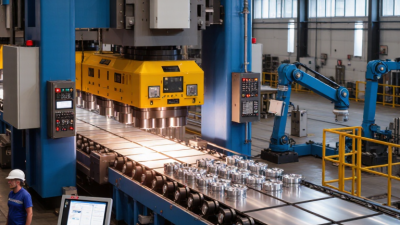
Steel stamping presses apply force to cut or form sheet metal. This chart compares broad, illustrative capacity ranges by press type; actual ratings vary by machine design and application.
Rated force is only one selection factor. Buyers should also consider material thickness, part geometry, stroke rate, tooling, and required precision.
Mechanical presses use a motor-driven flywheel and crank to deliver fast, repeatable strokes. They suit progressive-die work such as washers, brackets, and appliance panels. Hydraulic presses generate force through fluid pressure, with controllable stroke speed and dwell. That makes them useful for deep drawing or forming thicker blanks. Servo presses use programmable motors, allowing operators to adjust slide motion for each job. Setup still matters.
These are drive-system types; progressive-die and transfer presses describe production layouts. In a progressive die, a steel strip advances station by station, with each stroke adding a feature. Transfer systems move separate blanks between stations and handle larger or more complex parts. World Steel Association’s World Steel in Figures 2024 reports 1,892.2 million tonnes of crude steel production in 2023. This is not stamping volume, but it signals the scale of the material supply chain behind metal forming.
Compare machines by tonnage, bed size, stroke, speed, and die-change time. Check a sample part on the intended material and thickness. Watch the edges. Burrs, wrinkles, or uneven draw depth can reveal a poor match between press motion and tooling. The IEA’s Iron and Steel Technology Roadmap (2020) estimates iron and steel production causes about 7% of energy-system emissions; that figure covers steelmaking, not stamping. Still, energy use per part deserves measurement. A faster press is not automatically the better choice.
A steel stamping machine should be evaluated against the parts it will actually produce, not its advertised tonnage alone. Check the required material grade, thickness, blank size, die dimensions, stroke length, and production rate. A press rated for 200 tons may still be unsuitable if its bed cannot support the tooling. Ask for a machine layout and a sample cycle calculation. Small details matter.
Request a trial using your steel specification and representative tooling. Observe part consistency, feeding accuracy, noise, vibration, and changeover time. Ask how overload protection works and whether operators can access the die area safely. Review electrical requirements, control language options, manuals, and training availability. Confirm that the machine can match your facility’s power supply and local safety requirements before ordering. Do not rely on a brochure image.
For international purchasing, compare the delivered cost, including crating, freight, installation, commissioning, and recommended spare parts. Clarify who handles remote troubleshooting and how quickly common components can be supplied. Get written acceptance criteria for testing before shipment. A checklist helps, but it cannot replace a real production trial. I would also leave room for uncertainty: future material changes or tighter tolerances may affect the machine choice. A low purchase price can look less attractive after a long service delay.
Compare common press configurations by typical operating ranges and production fit. Capacity and speed depend on press design, material, die, stroke length, and operating conditions; confirm the required specifications with the equipment supplier.
| Machine Type | Typical Press Capacity | Typical Operating Speed | Best Suited For | Main Advantages | Key Purchasing Checks |
|---|---|---|---|---|---|
| C-Frame Mechanical Press | About 10–300 metric tons | Approximately 30–150 strokes per minute, depending on the model and stroke | General-purpose blanking, piercing, bending, and smaller components | Open-front access supports convenient die changes and part handling; a practical choice for varied jobs. | Check frame rigidity, rated capacity at the intended shut height, slide adjustment, guarding, and whether the off-center load is within the machine’s limits. |
| Straight-Side Mechanical Press | About 100–2,500 metric tons | Approximately 20–100 strokes per minute for many production applications | Higher-force stamping, larger dies, and production requiring greater frame stiffness | Four-sided frame construction provides strong support and helps manage loads from larger tooling. | Verify bed and slide dimensions, tonnage rating by crank angle, tie-rod or frame design, foundation requirements, and die protection provisions. |
| Hydraulic Press | About 100–2,000 metric tons or more | Often approximately 5–30 strokes per minute; cycle time varies with travel and process | Deep drawing, forming, and jobs that benefit from controlled force or adjustable slide motion | Force can be applied throughout the stroke, with adjustable pressure and dwell on suitable systems. | Assess cycle time, hydraulic cooling and filtration, energy use, leakage prevention, service access, and availability of local hydraulic support. |
| Servo-Driven Mechanical Press | About 50–2,000 metric tons, depending on the design | Variable; commonly around 20–100 strokes per minute in many applications | Forming processes that need adjustable slide motion, controlled dwell, or flexible production recipes | Programmable slide profiles can help adapt motion to the part and process; speed can be adjusted to production needs. | Compare usable motion profiles, rated capacity across the stroke, drive-system service requirements, energy data for the intended cycle, and control-system support. |
| High-Speed Mechanical Press | About 10–300 metric tons | Approximately 200–1,200 strokes per minute on suitable small-part applications | High-volume production of small, relatively thin stamped parts from coil | High output when matched with suitable tooling, feeding, and material; often configured for automated strip processing. | Confirm speed at the required tonnage and stroke, vibration and noise controls, feed accuracy, die-life needs, and the complete line’s safety system. |
| Transfer Press | About 200–2,000 metric tons across common production designs | Often approximately 10–40 strokes per minute, depending on part size and transfer sequence | Multi-stage forming of larger or deeper-drawn parts moved between stations | Integrated transfer handling can reduce manual movement between operations and support multi-step production. | Evaluate transfer timing and reach, station layout, die-change method, automation interfaces, guarding, and the actual part-specific cycle time. |
| Progressive-Die Coil Press Line | About 25–1,000 metric tons, matched to the tooling and material | Commonly approximately 30–300 strokes per minute; specialized lines may differ | High-volume parts made through successive operations in a progressive die using coil stock | Multiple operations occur in one die as the strip advances, supporting consistent output with properly designed tooling and feeding. | Check coil width and thickness range, feeder accuracy, straightener capacity, scrap handling, die protection, press speed under load, and line integration. |
Global purchasing note: Before ordering, confirm applicable electrical supply, safety compliance for the destination market, installation and foundation requirements, spare-parts lead times, operator training, documentation language, warranty coverage, and local service availability.
For global buyers, “best” depends on material thickness, part geometry, annual volume, and local service access. A practical shortlist includes mechanical presses for fast, repeatable strokes; hydraulic presses for adjustable force and deep forming; and servo presses for programmable motion. Progressive-die presses suit high-volume parts, while transfer presses move larger workpieces between stations. High-speed presses target small components, and straight-side presses provide rigidity for heavier loads. These are machine categories, not a universal ranking.
Check tonnage across the full stroke, bed dimensions, shut height, stroke rate, and die protection. Ask for sample-part trials using your actual steel grade and coil thickness. A machine that meets a brochure’s peak speed may run slower with a complex die. Small detail, big effect. The World Steel Association’s October 2024 Short Range Outlook forecast global steel demand at 1,773 million tonnes in 2025, up 1.2% from 2024; that broad demand outlook does not guarantee demand for any particular stamped part.
Grand View Research estimated the global metal stamping market at USD 214.1 billion in 2023 and projected 4.3% annual growth through 2030. Treat that as market context, not a machine-purchase forecast. Compare energy use, foundation requirements, guarding, controls, spare-parts lead times, and operator training. For overseas sites, confirm voltage and language support before signing. I would not choose on speed alone; even experienced buyers can underestimate commissioning time. A little less obvious, but worth checking.
Selection starts with the part, not the press’s headline tonnage. Match rated capacity to material grade, thickness, die size, stroke, and production speed. Check bed dimensions, shut height, feeder compatibility, and overload protection against your actual tooling. A press that is technically powerful can still be a poor fit. Ask for load curves and acceptance-test records, not only catalogue figures.
Installation needs a level, adequately rated foundation and verified electrical, pneumatic, and guarding arrangements. Before commissioning, check ram alignment and confirm that the press, feeder, and safety devices operate together. The U.S. Department of Energy’s Improving Compressed Air System Performance sourcebook estimates compressed air uses about 10% of industrial electricity in the United States. That figure covers industry broadly, not one press, but it supports checking air demand and leaks during site planning. Confirm applicable press-safety requirements, including relevant parts of ISO 16092, with qualified personnel.
Maintenance works best when tied to operating hours and recorded symptoms. Inspect lubrication points, fasteners, sensors, and die alignment; log oil temperature, unusual vibration, and stoppages. Small changes matter. Keep spare wear components on hand, but base stock levels on lead times and failure history. One practical flaw in many plans: checks are scheduled, yet no one records the baseline. Without it, gradual drift can look normal.