10 Best Welding Manufacturers for Global Buyers?
Choosing a welding manufacturer for international projects involves more than comparing prices or product catalogs. Buyers must assess process capability, production capacity, quality controls, delivery reliability, and technical support. The right partner can help keep fabrication consistent, whether the order involves structural components, precision parts, or custom assemblies. But no supplier is ideal for every project.
This guide introduces ten welding manufacturers for global buyers and explains what to examine before requesting a quote. Look for clear information about welding processes, material ranges, inspection methods, and production facilities. Ask how the company tracks batches, handles nonconforming parts, and communicates schedule changes. Details matter. A neat sample weld is useful, but it cannot prove consistent performance across a full production run.
Certifications may help buyers understand a supplier’s quality systems, yet they should be checked against the project’s actual requirements. Request relevant documentation, references, and sample inspection records where appropriate. Compare lead times and shipping arrangements, too; a low unit price may be offset by delays or extra coordination. Strong welding manufacturing depends on skilled people and repeatable controls, not equipment alone. Even so, a checklist cannot replace a direct technical conversation. Buyers should confirm specifications in writing and judge each manufacturer against their own risks, volume, and service expectations. These comparisons offer a starting point, not a guarantee.
Understanding Welding Manufacturers and Their Product Categories
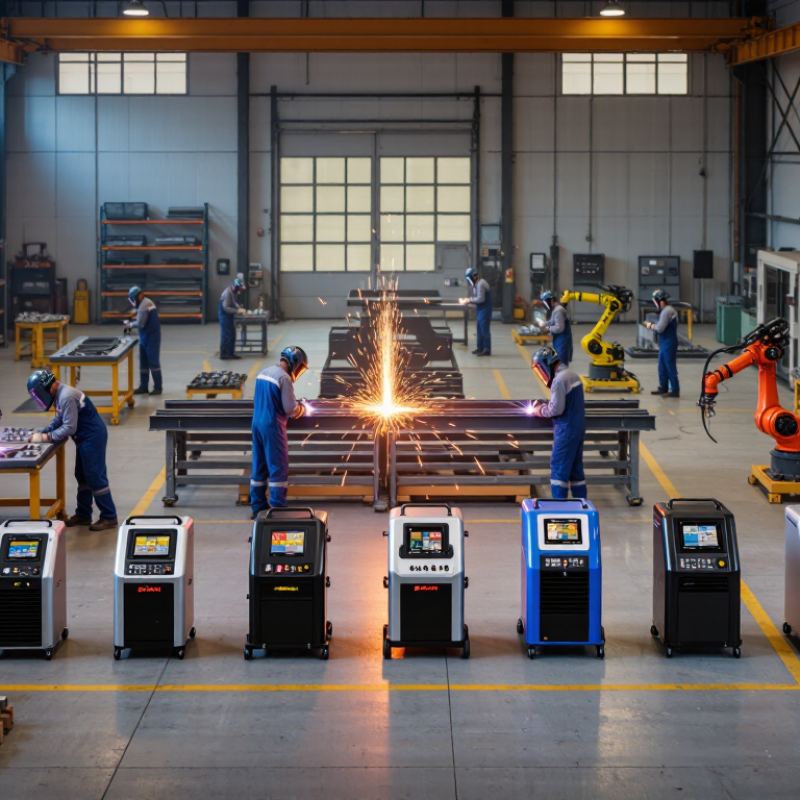
A welding manufacturer may supply more than a power source. Its catalog can include wire feeders, torches, cables, regulators, and replacement parts. Stick welding suits many outdoor repair jobs, while MIG/MAG systems support faster work on fabricated steel. TIG equipment offers more control on thin sections and visible joints. Plasma cutters may appear beside welding machines, but they serve a different task. Not every supplier makes every component. That matters.
Product categories help buyers compare suppliers without relying on catalog photos alone. Check the process, output range, input voltage, and rated duty cycle against the materials and shift length you expect. Ask whether manuals, compatible consumables, and service parts are available in your region. Small details count. A torch handle that feels bulky during a brief test may become tiring over a full shift. For production work, confirm feeder compatibility and the availability of common wear parts. A neat specification sheet cannot predict every workshop condition; cable reach and heat can change the real experience. No checklist removes every surprise.
Key Criteria for Evaluating Manufacturers in Global Markets
Selecting a welding manufacturer for global supply takes more than comparing prices.
Start by matching its processes and capacity to your actual parts. Ask whether it handles your material thickness, joint designs, and production volume consistently. A polished brochure cannot prove that. Request sample inspection records, documented welding procedures, and clear criteria for rejecting defects. Check whether quality certifications are current and relevant to your product and destination market. Requirements differ, so confirm them with qualified local specialists rather than assuming one certificate covers every shipment.
Look closely at traceability, too.
Can the supplier link a finished assembly to its material batch and inspection record? Ask how it controls rework, equipment maintenance, and changes in production. These details matter when a shipment arrives with a problem. Visit the facility if practical, or arrange an independent audit. Watch a production run, not only a prepared demonstration. Review lead times, packaging, export experience, and how quickly staff answer technical questions. Slow replies are not proof of poor work, but they can signal friction across time zones. No checklist removes all risk. A small trial order may reveal gaps that a polished audit misses. My own judgment would still need updating after real deliveries.
Profiles of 10 Welding Manufacturers for International Buyers
Profiles of 10 Welding Manufacturers for International Buyers
The global welding products market was valued at about US$16.3 billion in 2023, according to Grand View Research. Its report projects growth through 2030, reflecting demand for equipment across construction, transport, and manufacturing. The ten profiles below represent different supplier strengths, not a ranked list. One focuses on compact inverter machines for repair shops; another builds heavy-duty power sources for shipyards. A third specializes in robotic cells, while a fourth supplies submerged-arc systems for large structures. The fifth makes resistance-welding equipment for high-volume production.
Other profiles include a maker of TIG systems for precise, clean welds; a supplier of consumables and wire feeders; a producer of portable field equipment; a specialist in automated cutting and welding lines; and a manufacturer serving varied industrial applications. Capabilities differ sharply. A strong catalog does not guarantee local parts, clear manuals, or responsive service. Buyers should check these details with actual users.
Tips: Request test welds on your material and thickness. Ask for duty-cycle data, spare-part lead times, and operator training options. Verify applicable quality certificates directly, and compare service coverage at the intended installation site. A low quote can still be costly when support is far away.
Comparing Product Range, Technology, and Service Capabilities
10 Best Welding Manufacturers for Global Buyers?
Comparing Product Range, Technology, and Service Capabilities
For global buyers, a supplier’s catalogue is only a starting point. Compare process coverage, output range, duty cycle, and compatibility with common consumables. A shop handling thin stainless panels needs different controls from one joining thick structural sections. MarketsandMarkets estimated the global welding equipment market at USD 15.2 billion in 2023, projecting USD 20.3 billion by 2028. The report’s 5.9% annual growth forecast signals a changing market, but does not prove that any single product range suits a specific workshop. Details matter.
Technology claims also need practical checks. Ask for demonstrations using your materials, joint geometry, and production speed. The International Federation of Robotics reported 541,302 industrial robot installations worldwide in 2023. That broader automation figure makes integration worth discussing, though it is not welding-specific. Check whether a manufacturer can support robotic cells, data logging, and operator training—not just supply the power source. Service can be equally decisive: confirm spare-parts availability, response times, local technical support, and clear documentation before comparing prices. A low-cost unit may become expensive when a torch, feeder, or control board delays production. And catalogues can be misleading. Compare verified specifications, then test them against real jobs.
How to Select a Manufacturer for Your Welding Requirements
Choosing a welding manufacturer begins with your actual work, not a broad catalog. Describe the metal grades, thicknesses, joint types, production volume, and operating conditions your team faces. Clarify whether you need manual equipment, automated cells, fixtures, consumables, or a complete production line. Ask which welding processes the manufacturer supports and how its team handles changes in material or design. A useful supplier will ask detailed questions before recommending equipment.
Tips: Send a drawing and a representative sample when possible. Request a written quotation that identifies the configuration, tooling, delivery schedule, training, and service support. Confirm what testing or inspection records come with the equipment.
Assess technical support as carefully as price. Ask about response times, spare-parts availability, commissioning, and operator training. If possible, review a demonstration using material similar to yours; a neat weld on a different alloy may tell you little. Check quality-control procedures and request relevant process records, rather than relying only on sales claims.
For a large order, discuss acceptance criteria before production starts. I have seen teams overlook installation space and power needs; it is an easy detail to miss, and an expensive one to fix later. A polished proposal helps, but clear answers to specific questions matter more.