Why Choose Aluminum Parts Manufacturing for Your Project?
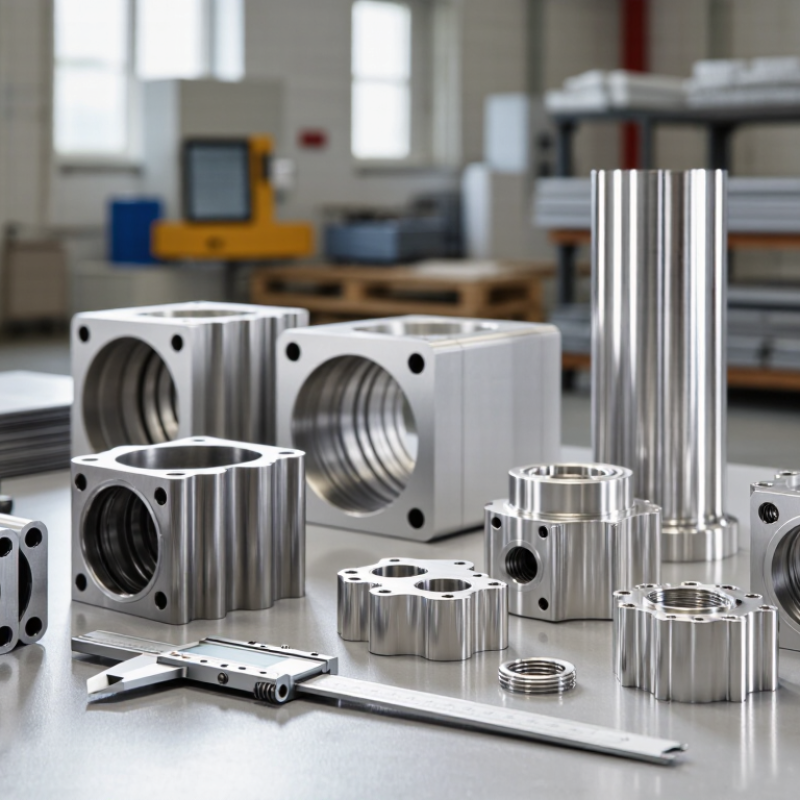
Choosing a material is not a catalog decision. It affects weight, machining time, finishing, and the part’s behavior in service. Aluminum parts manufacturing can suit projects that need lightweight components, precise features, and practical production at different volumes. Think of a milled housing with thin walls, drilled mounting holes, and a clean surface finish. The right alloy and process still matter.
The market reflects aluminum’s broad industrial role. The U.S. Geological Survey’s Mineral Commodity Summaries 2025 estimates that global primary aluminum production reached about 72 million metric tons in 2024. That scale supports a mature supply chain, but it does not guarantee every grade is available locally or on schedule. Material selection deserves a real check.
There is also a resource-efficiency case. The International Aluminium Institute reports that recycling aluminum requires about 5% of the energy used to produce primary aluminum. That figure describes remelting, not the complete footprint of a finished part. Tooling, transport, coatings, and scrap handling still count. They are easy to overlook.
For engineers, the decision comes down to requirements: load, operating temperature, tolerances, corrosion exposure, and finish. A 6061 component may machine differently from a 7075 component, and higher strength can bring trade-offs in cost or corrosion performance. No alloy is a universal answer. This guide examines where aluminum parts manufacturing can deliver value, what to verify with a supplier, and where another material may be the more dependable choice.
Define the Material: Aluminum Density Is 2.70 g/cm³ (The Aluminum Association)
Aluminum’s density is commonly given as 2.70 g/cm³, a useful baseline when estimating part mass. In practical terms, one cubic centimeter of pure aluminum weighs about 2.70 grams. Multiply a component’s volume by this value for a first-pass estimate. A small machined bracket measuring 40 cm³ would weigh about 108 grams before allowances. A useful starting point. The exact number is not universal: alloy composition and temperature can shift density slightly, while coatings or inserts add mass.
That distinction matters during design. A lightweight housing may reduce the load on a moving assembly, while its walls still need enough stiffness and strength for service. Density alone cannot predict either property. Aluminum alloys differ, and geometry, heat treatment, and manufacturing route affect performance. For a CNC-machined part, compare the estimate with the finished CAD model and confirm the alloy’s published data. Check the alloy. For cast or fabricated components, account for cavities, weld metal, fasteners, and finishing layers. Treat 2.70 g/cm³ as a planning figure, not a promise of the final scale reading. This is easy to overlook.
Why Choose Aluminum Parts Manufacturing for Your Project?
Compare the approximate densities of common engineering materials.
Aluminum has a density of about 2.70 g/cm³, making it substantially lighter than steel by volume. This low density can help reduce the weight of parts and assemblies.
Select the Process: Compare CNC Machining, Casting, and Extrusion
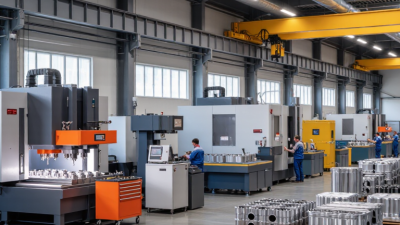
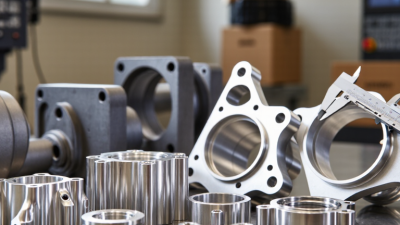
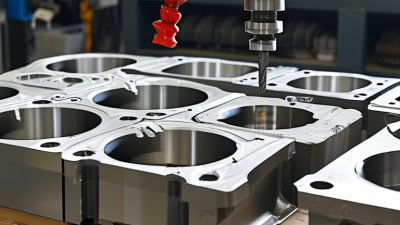
CNC machining suits aluminum parts that need tight tolerances, changing geometry, or a small production run. A machinist can cut a prototype from solid stock and adjust a bore or mounting face without redesigning a mold. The trade-off is material waste: chips are produced, and cycle time can rise with deep pockets or thin walls. For a bracket with several precise holes, that control can matter more than raw speed.
Casting is often practical for complex shapes and larger batches, especially when a part needs ribs or curved cavities. Yet tooling costs, porosity, and post-casting machining deserve attention. A casting may look ready, but a sealing face could still need a finishing cut.
Extrusion creates consistent profiles with a fixed cross-section, such as rails, channels, and heat-sink shapes. It can be efficient at volume, but features that change along the part’s length usually need secondary machining. There is no universal winner.
Material life also affects process choices. The International Aluminium Institute reports that about 75% of all aluminium ever produced remains in use today. That supports designing for reuse, though it does not make every process equally efficient. I would compare annual volume, tolerances, tooling budget, and scrap recovery before choosing. One missed detail: extrusion dies and casting molds can constrain late design changes. A prototype may reveal that too late.
Evaluate Heat Transfer: Pure Aluminum Conducts About 237 W/m·K
Heat can move quickly through aluminum. The CRC Handbook of Chemistry and Physics reports pure aluminum’s thermal conductivity at about 237 W/m·K near room temperature. That figure helps explain its use in heat sinks, electronic housings, and cooling plates. In practice, a warm component can spread heat into a broad, finned surface, where airflow carries it away. That is substantial.
But 237 W/m·K describes pure aluminum, not every machined part. The ASM Handbook, Volume 2, gives lower conductivity values for common aluminum alloys; 6061-T6 is around 167 W/m·K. Alloy choice, temper, geometry, and contact between mating surfaces all affect real performance. A narrow bridge or poorly seated interface can bottleneck heat flow, even when the surrounding material conducts well. Not every part.
For a project review, compare the actual alloy’s datasheet value with the heat load and operating temperature. Then consider wall thickness, fin spacing, and how the part will contact its heat source. Copper conducts more heat, but it is heavier; aluminum may offer a useful balance. I would still validate the design with a thermal simulation or prototype. Material data is a starting point, not a guarantee.
Why Choose Aluminum Parts Manufacturing for Your Project? - Evaluate Heat Transfer: Pure Aluminum Conducts About 237 W/m·K
| Material (Representative) |
Thermal Conductivity at Approx. Room Temperature (W/m·K) |
Relative to Pure Aluminum |
Typical Heat-Transfer Consideration |
| Pure aluminum |
237 |
1.00× |
A useful benchmark for lightweight heat spreaders and thermal components. |
| Copper |
401 |
1.69× |
Higher conductivity, but substantially denser than aluminum. |
| Magnesium |
156 |
0.66× |
Very lightweight; conductivity is lower than pure aluminum. |
| Brass (representative) |
109 |
0.46× |
Conductivity varies with composition; often selected for other mechanical or corrosion-related requirements. |
| Carbon steel (representative) |
50 |
0.21× |
Lower heat conduction than aluminum; grade and condition affect the value. |
| AISI 304 stainless steel |
16.2 |
0.068× |
Low conductivity compared with aluminum; commonly chosen for other material properties. |
Values are approximate representative figures near room temperature. Actual thermal conductivity depends on alloy, purity, temper, and temperature; verify the specific material grade for design calculations.
Assess Sustainability: Aluminum Recycling Uses About 95% Less Energy (IAI)
Choosing aluminum parts can support a lower-energy manufacturing strategy, especially when recycled material is available. The International Aluminium Institute reports that recycling aluminum uses about 95% less energy than producing primary aluminum. That difference matters. Less energy demand can reduce a part’s production footprint, though actual emissions depend on the electricity and processes used.
For a project, ask suppliers about recycled content, material certifications, and how scrap is handled. Clean, sorted aluminum offcuts can often return to production, while mixed alloys may require extra sorting. A machined bracket, for example, can generate chips that are collected rather than discarded. The detail matters. Recycling does not make every part impact-free, and transport, finishing, and design choices still count.
There is a trade-off worth examining. Recycled feedstock may vary in availability or composition, so critical parts still need verified alloy specifications and suitable testing. I would not treat the 95% figure as a guaranteed saving for every component. It is a useful benchmark, not the whole calculation. Ask for project-specific data before comparing material options.
Confirm Project Fit: Balance Alloy Strength, Tolerance, Cost, and Volume
Choosing aluminum starts with the loads, not the alloy’s reputation. A bracket carrying steady weight may suit a different grade than a thin enclosure exposed to vibration. Higher strength can reduce wall thickness, but harder alloys may increase machining time or complicate forming. Check the part’s load direction, joining method, and operating environment before fixing the specification. Strength is only one piece.
Tolerance affects cost directly. A ±0.05 mm requirement across a long milled surface may need extra setups and inspection; apply tight limits only to functional features. Ask the manufacturer to review datums, tool access, and measurement methods. Small batches also behave differently from production runs. Setup time weighs more heavily on each part. We sometimes over-specify early designs; that can be hard to unwind later.
Compare material price with total part cost, including scrap, finishing, and cycle time. The International Aluminium Institute reports that recycled aluminum production uses about 5% of the energy required for primary production, an important lifecycle consideration, though it does not guarantee lower purchase prices. Request quotes at realistic volume breaks, and test a representative prototype against the actual fit and load conditions. A little uncertainty remains until the part is measured.