2026 Top Modern Manufacturing Trends for Global Sourcing?

Global sourcing is entering a more demanding phase. In 2026, buyers will evaluate factories beyond price, speed, and production capacity. They will examine automation, energy use, cybersecurity, traceability, and supply continuity. This shift places modern manufacturing at the center of sourcing strategy.

Professor Klaus Schwab, founder of the World Economic Forum, described the industrial transformation clearly: “The Fourth Industrial Revolution is characterized by a fusion of technologies that is blurring the lines between the physical, digital, and biological spheres.” His observation remains relevant as factories connect sensors, robotics, artificial intelligence, and cloud-based production systems. A supplier may now share real-time machine data, digital inspection records, and carbon measurements with an overseas customer.

The practical question is simple.

Can these systems deliver reliable results?

This overview examines the leading modern manufacturing trends shaping global sourcing in 2026. It considers smart factories, regional production networks, advanced robotics, additive manufacturing, predictive maintenance, and lower-carbon operations. It also explores how procurement teams can assess suppliers through factory visits, sample audits, production trials, and verified performance data. Experience still matters. A polished dashboard cannot replace a missed delivery or inconsistent batch quality.

Some predictions will prove imperfect. Technology adoption remains uneven, especially among smaller manufacturers. Data may be incomplete, and sustainability claims require careful verification. Therefore, sourcing leaders should combine digital evidence with human judgment, independent audits, and transparent supplier communication. The strongest global sourcing decisions will not chase every new tool. They will connect useful innovation with measurable quality, responsible production, and resilient long-term partnerships.

2026 Top Modern Manufacturing Trends for Global Sourcing?

Defining Modern Manufacturing in the 2026 Global Sourcing Landscape

Modern manufacturing in the 2026 global sourcing landscape is not simply a faster factory. It is a connected operating model linking design, production, quality, logistics, and compliance.

In supplier evaluations, I look for live production data, stable process controls, and clear ownership of defects. A factory should explain how one component moves from an approved drawing to a packed shipment. That explanation matters more than impressive machinery.

Flexible automation is becoming practical for medium-volume orders. Vision inspection, modular tooling, and digital work instructions can reduce variation without removing skilled judgment.

A useful digital twin may expose bottlenecks before a steel fixture is cut. However, dashboards can create false confidence. Data is reliable only when teams calibrate sensors, document changes, and investigate unusual results.

Small details still decide outcomes: a mislabeled carton, a two-hour inspection delay, or humidity affecting stored materials.

Global sourcing decisions also require measurable resilience.

Buyers are checking backup processes, regional logistics options, energy records, worker training, and supplier financial stability. Ethical sourcing and lawful production are operational requirements, not decorative statements.

I still see one weakness: many assessments reward polished documents over factory behavior. A stronger approach combines remote evidence with scheduled site visits, sample testing, and honest conversations with operators.

The most revealing evidence often appears beside the production line, not inside the presentation deck.

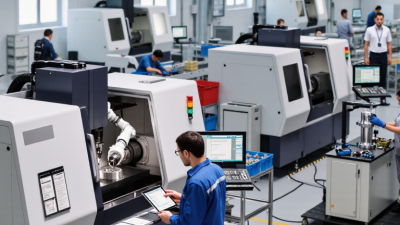
Mapping the Technologies Reshaping International Production

2026 Top Modern Manufacturing Trends for Global Sourcing?

International production is shifting from low-cost purchasing toward measurable capability. Robotics, artificial intelligence, digital twins, and connected sensors now influence supplier selection. The International Federation of Robotics recorded 541,302 industrial robot installations in 2023, with more than 4.28 million robots operating worldwide. This scale changes factory economics. A sourcing team may inspect a robotic welding cell, review cycle-time data, and test whether production records remain traceable across borders.

Digital twins can simulate a line before equipment moves. A supplier could model a packaging change, identify bottlenecks, and reduce expensive trial runs. The World Economic Forum’s Global Lighthouse Network reports show how advanced factories combine automation, analytics, and connected operations to improve productivity and flexibility. Yet the picture is uneven. Many factories still depend on spreadsheets, manual inspections, and disconnected software. Technology alone does not create reliable production.

Energy intelligence is also becoming a sourcing requirement. The International Energy Agency identifies industry as responsible for roughly 37% of global final energy consumption. Sensors can expose compressed-air leaks, abnormal motor loads, or idle machines during a night shift. These details affect cost and resilience. However, smaller suppliers may lack trained engineers or clean historical data. Buyers should therefore assess interoperability, cybersecurity controls, maintenance skills, and evidence from real production—not only impressive pilot demonstrations. Progress is real, but sometimes the factory dashboard looks smarter than the factory itself.

Evaluating Sustainability, Resilience, and Supply Chain Transparency

Global sourcing in 2026 will depend on more than lower production costs. Buyers are examining carbon emissions, water use, labor conditions, and delivery reliability. Sustainability is becoming an operational requirement, not a marketing phrase.

Manufacturers are measuring energy use at each production stage. Some facilities now record electricity, water, and material waste by batch. These details help buyers compare suppliers more fairly. However, reported data is not always complete. A factory may track direct emissions but overlook transportation or subcontracted processing. That gap requires careful verification.

Resilience also depends on practical supply chain design. Sourcing teams are mapping tier-two and tier-three suppliers before disruptions occur. They are comparing regional capacity, raw material risks, backup tooling, and recovery times. Digital records can show where materials originated and when they changed hands. This improves traceability during quality investigations or sudden shortages.

Transparency needs evidence. Site visits, production records, worker interviews, and independent audits provide stronger assurance than polished dashboards. Still, audits can miss seasonal labor changes or unreported subcontracting. Buyers should ask repeated questions and test records against physical output. A transparent supplier can explain weaknesses clearly and show how corrective actions are monitored. That honesty is valuable. Imperfect systems can improve when both sides measure results consistently.

Comparing Regional Manufacturing Hubs and Sourcing Strategies

2026 Top Modern Manufacturing Trends for Global Sourcing

Global sourcing is becoming a regional decision, not a single-country exercise. UNCTAD reported that global trade reached approximately $33 trillion in 2024. That scale hides sharp differences between manufacturing hubs. East Asia remains strong in electronics, tooling, and dense supplier networks. Central Europe offers shorter delivery routes into major consumer markets. North America provides advanced automation, energy access, and closer customer support. Southeast Asia is gaining attention for labor-intensive assembly and expanding industrial capacity.

The best hub depends on the product’s risk profile. A factory near a deep-water port may reduce freight costs, but port congestion can erase that advantage. The World Bank’s Logistics Performance Index 2023 shows wide differences in customs efficiency, infrastructure, and shipment reliability across economies. These details matter when a delayed component stops a production line. Regional sourcing can also reduce geopolitical exposure, yet duplicate tooling and audits increase operating costs. That trade-off is easy to underestimate.

Digital production changes the comparison further. The International Federation of Robotics reported more than 541,000 industrial robots were installed globally in 2023. Automation supports consistent quality, but it does not replace skilled maintenance teams. I would also question simple reshoring claims. Higher local wages, limited supplier depth, and unstable energy prices can weaken the business case. A practical strategy may combine one high-efficiency hub, one regional backup, and transparent supplier-level data. It is not perfect. Forecasts still fail when demand changes suddenly.

2026 Top Modern Manufacturing Trends for Global Sourcing

Comparing regional manufacturing hubs through 2023 manufacturing value added

East and South Asian hubs combine substantial manufacturing scale with strong production ecosystems, while North American and European hubs remain important for regionalized, high-value, and resilience-focused sourcing. Values represent 2023 manufacturing value added in current US dollars, rounded to the nearest $0.01 trillion.

Source: World Bank, Manufacturing Value Added (current US$), indicator NV.IND.MANF.CD; values rounded for comparison.

Assessing Supplier Readiness, Risks, and Future Opportunities

Global sourcing in 2026 will depend less on low prices and more on supplier readiness. In factory assessments, practical evidence matters more than polished presentations. Buyers should inspect production records, maintenance logs, training files, and emergency procedures. A supplier claiming digital control should demonstrate live data, not only screenshots. Small details reveal capability, such as labeled material bins, calibrated gauges, and clear inspection ownership.

Risk assessment must extend beyond the factory gate. Buyers need visibility into sub-suppliers, shipping routes, energy stability, cybersecurity, and changing trade requirements. Traceability should connect incoming materials to finished batches within hours, not days. Environmental data also needs verification, especially when emissions figures influence purchasing decisions. A missing backup plan for power, tooling, or skilled workers can delay production quickly. It happens.

Supplier readiness is rarely equal across regions or company sizes. A technically strong factory may lack formal documentation, while a well-documented supplier may struggle with process discipline. This creates room for development partnerships, staged audits, and shared forecasting. However, buyers should not confuse cooperation with unlimited patience. Repeated corrective actions without measurable progress indicate deeper management problems. I have seen promising suppliers lose opportunities because they hid minor defects. Honest reporting would have created trust earlier. Future sourcing teams will need commercial judgment, technical literacy, and the humility to question their own scoring models.

2026 Top Modern Manufacturing Trends for Global Sourcing? – Assessing Supplier Readiness, Risks, and Future Opportunities

Evidence-based sourcing benchmark using publicly reported global indicators and the latest available reference years.

Manufacturing trend Verified market indicator Supplier readiness signals Primary sourcing risks 2026 opportunity Readiness rating Reference
Industrial robotics and automation Worldwide industrial-robot installations reached approximately 541,000 units in 2023, while the global operational stock exceeded 4.2 million units. Documented automation roadmap; robot uptime data; preventive-maintenance records; trained controls engineers; validated process capability after automation. High capital requirements, integration delays, cybersecurity exposure, and limited availability of skilled maintenance personnel. Use automation maturity as a supplier-selection criterion for repetitive, high-volume, and precision-critical operations. High International Federation of Robotics, World Robotics 2024, 2023 data
Artificial intelligence and machine-vision quality control Manufacturing is among the sectors with rapidly increasing generative-AI experimentation, but industrial deployment remains dependent on reliable data, governance, and process-specific validation. Digitized inspection records; labeled defect images; traceable model versions; human review procedures; documented false-positive and false-negative rates. Undetected model drift, biased training data, intellectual-property leakage, and unreliable results under changing lighting or material conditions. Reduce inspection cycle time and improve early defect detection through controlled pilot programs with measurable acceptance thresholds. Medium World Economic Forum, Future of Jobs Report 2025; NIST AI Risk Management Framework
Industrial Internet of Things and real-time traceability Connected sensors, cloud manufacturing systems, and digital production records are increasingly used to monitor equipment, quality, energy, and material movement across multi-tier supply chains. Machine-level data capture; synchronized production and shipment records; unique lot identification; role-based access; documented data-retention policies. Incomplete tier-two and tier-three visibility, incompatible data formats, unauthorized access, and inaccurate manual entries. Create digital control towers for supplier performance, deviation management, and faster root-cause analysis. Medium International Organization for Standardization, ISO 23247:2021; World Economic Forum supply-chain research
Low-carbon and energy-efficient production Industry accounted for about 37% of global final energy use in 2022, making energy efficiency and emissions measurement material sourcing considerations. Energy meters by process; verified greenhouse-gas inventory; renewable-electricity documentation; efficiency targets; corrective-action records. Volatile energy prices, weak emissions data, carbon-related trade requirements, and possible greenwashing. Prioritize suppliers that can provide product-level carbon data and credible reduction plans without compromising delivery or quality. High International Energy Agency, Energy Technology Perspectives 2024
Circular manufacturing and material efficiency Global material extraction and processing remain responsible for more than half of global greenhouse-gas emissions, increasing pressure to reduce waste and improve material productivity. Scrap-rate reporting; recycled-content verification; repair or reuse procedures; material passports; controlled waste-disposal records. Unverified recycled content, inconsistent secondary-material quality, contamination, and insufficient reverse-logistics capacity. Lower material cost and regulatory exposure through design-for-repair, yield improvement, and closed-loop recovery programs. Medium United Nations Environment Programme, Global Resources Outlook 2024
Additive manufacturing for tooling and spare parts Additive manufacturing is established for prototyping, customized components, tooling, and selected low-volume production, but qualification requirements still limit broad replacement of conventional processes. Qualified machine parameters; material-batch traceability; dimensional inspection; post-processing controls; documented part-approval procedures. Variable mechanical properties, limited machine capacity, cyber theft of digital designs, and uncertain long-term durability. Shorten tooling lead times, support regional production, and reduce inventory for obsolete or low-demand spare parts. Medium International Organization for Standardization, ISO/ASTM 52900:2021; OECD additive-manufacturing studies
Regionalization and multi-sourcing Global trade growth has slowed relative to the rapid expansion observed before the global financial crisis, while geopolitical and logistics disruptions continue to encourage supply-base diversification. At least two qualified supply options for critical items; documented capacity by site; alternate logistics routes; tested business-continuity plans. Higher unit costs, duplicated tooling, supplier qualification time, inconsistent specifications, and constrained regional capacity. Balance total landed cost against resilience by using dual sourcing for critical parts and regional backup capacity for essential products. High World Trade Organization, Global Trade Outlook and Statistics 2024; UNCTAD, Review of Maritime Transport 2024
Cybersecurity for connected factories Manufacturing remains one of the most frequently targeted sectors for industrial cyber incidents, particularly where operational technology is connected to enterprise and cloud networks. Asset inventory; network segmentation; multi-factor authentication; patch governance; offline backups; incident-response testing; supplier-access controls. Production stoppage, ransomware, theft of technical data, unsafe machine behavior, and inadequate visibility into subcontractor access. Make cybersecurity evidence a mandatory supplier-qualification gate for digitally connected production and remote maintenance. Critical International Electrotechnical Commission, IEC 62443 series; European Union Agency for Cybersecurity, Threat Landscape reports
Workforce reskilling and technical talent development The World Economic Forum estimates that 39% of workers’ existing skill sets may be transformed or become outdated during 2025–2030, increasing the need for continuous technical training. Annual training hours; certification records; cross-trained maintenance staff; documented succession plans; measurable competency assessments. Longer ramp-up periods, operator turnover, weak process knowledge transfer, and dependence on a small number of specialists. Favor suppliers with structured apprenticeship, cross-training, and digital-work-instruction programs to stabilize quality and capacity. High World Economic Forum, Future of Jobs Report 2025
Assessment note: Readiness ratings are qualitative sourcing benchmarks based on technology maturity, implementation complexity, verification requirements, and operational risk. Reference years differ because the latest authoritative datasets are published on different schedules.