How to Choose a State Contract Manufacturing Company?
Choosing a state contract manufacturing company is more than comparing prices or reviewing a polished capabilities sheet. The right partner should understand your product, communicate clearly, and demonstrate how work moves from incoming materials to finished goods. Ask to see the actual production environment, not only presentation slides. Look for orderly workstations, traceable materials, maintained equipment, and clear inspection records. Small details matter.
W. Edwards Deming, a respected manufacturing quality expert, put the principle plainly: “Quality comes not from inspection, but from improvement of the production process.” That idea applies when evaluating a state contract manufacturing partner. Ask how the company prevents defects, handles process changes, and responds when a shipment falls behind schedule. Check its experience with your product type, available capacity, quality systems, and supplier oversight. Request specific examples, while protecting confidential business information. A thoughtful site visit can reveal practical strengths that a proposal cannot.
Compare communication and continuity, too. Who will answer a production question on a busy Tuesday? How are forecasts, engineering updates, and delivery risks shared? A nearby facility may simplify visits and coordination, but distance alone does not guarantee reliability. No scorecard catches everything. An audit can miss a strained shift or a late component. Consider a small pilot run before committing significant volume, and agree on measurable expectations. The best choice is not necessarily the largest or cheapest provider. It is the partner whose capabilities and working habits fit your real production needs.
Understanding the Role of a State Contract Manufacturing Company
How to Choose a State Contract Manufacturing Company?
Understanding the Role of a State Contract Manufacturing Company
A state contract manufacturing company turns a client’s product specifications into repeatable production. Its role can include sourcing materials, operating equipment, inspecting batches, and coordinating packaging or delivery. For a company choosing a local supplier, this can mean shorter transport routes and closer communication, but location alone does not guarantee reliable output. Ask how the manufacturer documents revisions, handles rejected parts, and keeps production consistent when demand rises. Small details matter: a mislabeled carton or delayed material shipment can interrupt an entire production run.
The scale of the sector makes supplier capability important. The 2024 Deloitte and Manufacturing Institute survey found that 86% of manufacturing executives expect smart manufacturing to drive competitiveness within five years. That finding points to the value of traceable production data, not just modern machinery. Still, survey expectations are not proof that every factory is ready. Review sample inspection records, capacity assumptions, and quality procedures; visit the floor if practical. No checklist catches every mismatch. A polished presentation can hide a process that struggles with real orders.
Tips: Request a sample production record and ask the team to explain each inspection step. Compare quoted lead times with recent delivery performance, and clarify who approves design or material changes. Share a small pilot order before committing larger volumes. If answers stay vague, pause and investigate.
Use these example weights as a starting point when comparing contract manufacturers. Assess regulatory compliance and quality systems alongside technical fit, available capacity, supply-chain resilience, and communication. Adjust the weights to match your product and risk requirements; they are a sample evaluation framework, not industry survey results.
Defining Your Product and Production Requirements
Before comparing a state contract manufacturing company, write a clear product brief. Include dimensions, materials, finish, packaging, and acceptable tolerances. A drawing with measurements can prevent costly misunderstandings. So can a sample or reference photo. Describe how the product will be used, stored, and shipped. Those conditions may affect material choices and inspection needs.
Define the production work, not just the finished item. Estimate annual demand, expected order sizes, and delivery windows. Note whether demand changes by season. Specify required equipment or processes, such as molding, machining, assembly, or labeling. Also explain how defects should be checked and recorded. Details matter. If you do not know a tolerance or test method yet, mark it as undecided instead of guessing.
Ask potential manufacturers to quote against the same specifications. A low price may reflect a different material, inspection level, or batch size. Request a sample run when practical, then review fit, finish, packaging, and process records. Confirm how schedule changes, rejected parts, and design updates will be handled. It can feel tedious. Still, these questions reveal whether a supplier’s capabilities match your real production needs. A product brief is rarely perfect on the first pass; leave room to revise it after technical discussions.
Evaluating Manufacturing Capabilities and Quality Standards
Choosing a state contract manufacturing company starts with matching its demonstrated capabilities to your product, not its sales presentation.
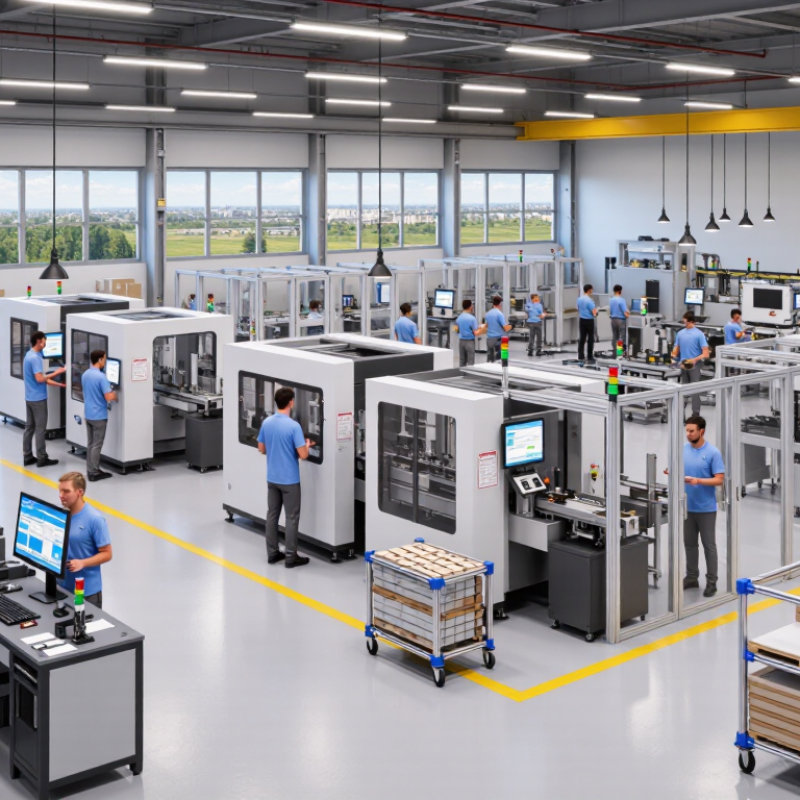
Ask to see the equipment and process flow used for similar work, including how materials move from receiving to finished goods. Can the line meet your volume without sacrificing inspection time? Small details matter. Review changeover times, maintenance records, and staffing on the shift assigned to your production. A polished tour is useful, but it cannot show every routine difficulty.
Quality standards need evidence.
Request current procedures for inspection, equipment calibration, document control, and handling production deviations. Check that any claimed certifications apply to the relevant facility and product scope, then verify them independently. Look for lot-level traceability: staff should be able to connect a finished unit to its material records and inspection results. A pilot run can reveal practical issues, such as inconsistent seals or labels that shift during packing. Still, one clean batch does not prove consistent production; compare records across multiple runs. No checklist is perfect. I would also ask how problems are reported and corrected, since a capable partner should explain weaknesses plainly, not only present successful results.
Comparing Costs, Contracts, and Supply Chain Reliability
A low unit price can hide expensive setup, inspection, packaging, or freight charges. Compare quotes using the same annual volume, product specifications, and delivery schedule. Ask whether tooling, changeovers, scrap, and rush orders are included. Details matter. A supplier quoting $4.20 per unit may cost more than one quoting $4.60 if pallet delivery is excluded. An in-state facility may shorten freight routes, but location alone does not prove reliability.
Read the contract for minimum order quantities, forecast commitments, payment timing, quality acceptance, and tooling ownership. Define what happens when a batch fails inspection, and set a clear correction timeline. Avoid vague phrases such as “reasonable efforts” when production dates matter. Test the assumptions. A practical agreement names contacts, escalation steps, and how material-price changes are reviewed.
Supply-chain reliability shows in ordinary details: backup suppliers, inventory records, maintenance schedules, and prompt notice of delays. Ask for recent on-time delivery and defect data, then check how those figures are calculated. A nearby facility may still depend on one distant source for a critical component. That risk is easy to miss. Forecasts shift, and even careful teams misjudge demand. Choose a manufacturer willing to explain its limits and revise plans before a shortage reaches your production line.
Selecting a Partner and Preparing for Production
Selecting a state contract manufacturing company starts with the work, not the sales deck.
Define your product’s materials, annual volume, tolerances, packaging, and delivery needs. Then ask for evidence: a sample inspection record, a process flow, and a clear account of how defects are contained. A polished factory tour is not proof. Look closely at the actual line, including labeled bins, tool-change logs, and how operators flag a problem.
Check whether the partner can move from a controlled pilot to repeatable production. Confirm who owns tooling, how engineering changes are approved, and which quality measures arrive with each shipment.
Deloitte’s 2024 smart manufacturing survey found that 86% of manufacturing executives expect smart factory solutions to drive competitiveness within five years. Ask what digital records the plant can actually share, rather than assuming its equipment provides useful visibility.
Prepare your team before the first production run: freeze drawings, agree on acceptance criteria, and provide realistic demand forecasts. MHI’s 2024 Annual Industry Report found that 88% of respondents considered supply-chain innovation important to business. That makes capacity and supplier visibility worth discussing early. Request a capacity plan and ask how the company handles a late component or a sudden volume change.
Plans can still miss. That is worth admitting.
A candid review of risks, owners, and next steps is more useful than a perfect-looking forecast.